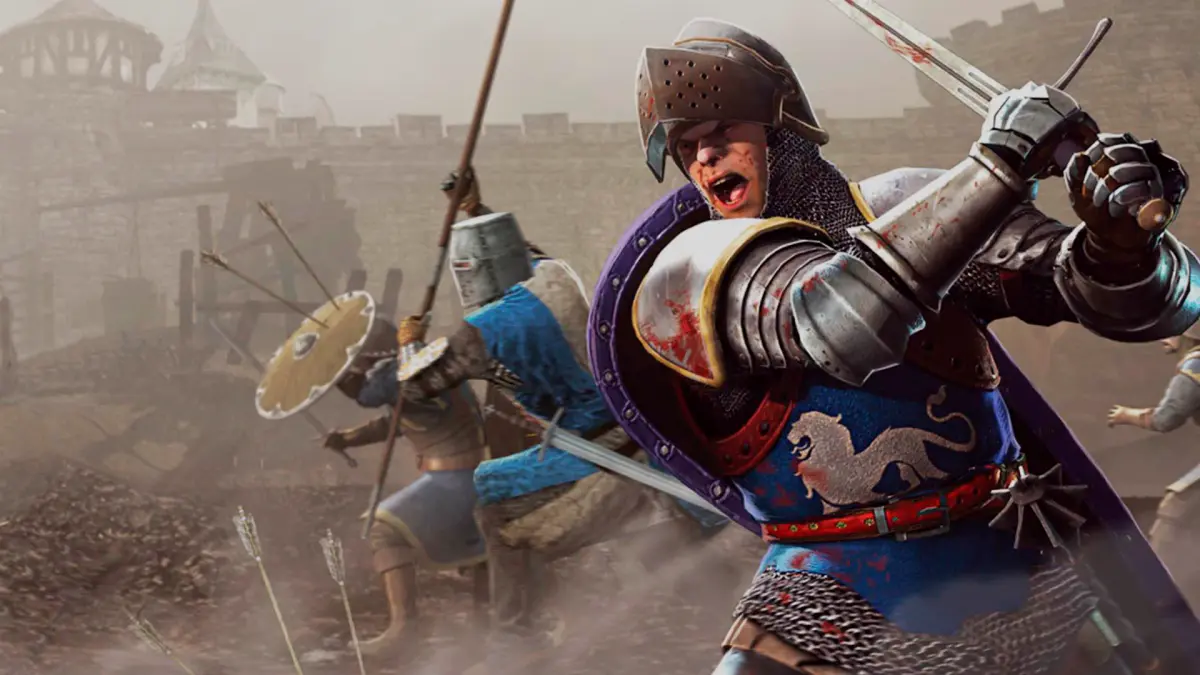
Grasp hitboxes and weapon reach in Chivalry: Medieval Warfare. Master these concepts to land consistent hits, avoid damage, and exploit enemy weaknesses.
In the brutal world of Chivalry: Medieval Warfare, understanding how hitboxes and weapon reach function is paramount to mastering combat. This isn't a game where a pixel-perfect aim is always enough; the game's physics and collision detection are nuanced. Mastering these concepts will allow you to land hits consistently, avoid damage, and exploit enemy weaknesses.
What is a Hitbox?
A hitbox is an invisible geometric shape that surrounds a player or object, defining the areas where it can be damaged. In Chivalry, hitboxes are generally quite generous and follow the character model's silhouette, but they are not always perfectly aligned, especially during complex animations. Understanding these nuances is key to landing critical blows and avoiding being hit.
- Head Hitbox: The smallest but most critical hitbox. A successful hit to the head deals significantly more damage, often resulting in a one-shot kill with powerful weapons like the Maul or a well-placed Longbow arrow. Aim for the head whenever possible, especially against unarmored opponents or those with exposed visors.
- Torso Hitbox: The largest and most commonly hit hitbox. Damage here is standard. Most attacks will connect with the torso.
- Limb Hitboxes (Arms & Legs): These hitboxes are generally smaller and can sometimes absorb damage that would otherwise hit the torso. While less damaging than a headshot, hitting limbs can still be effective, especially for "chipping" away at an opponent's health or interrupting their attacks. Severing limbs is also possible with high damage weapons, though this is primarily a visual effect and doesn't always instantly kill.
- Shield Hitbox: Shields have their own hitboxes. A successful block means the attack connected with the shield's hitbox, not the player's. Understanding shield hitboxes is crucial for both blocking incoming attacks and for aiming around an opponent's guard.
Weapon Reach: Beyond the Visual
Weapon reach isn't just about how long your weapon appears to be. Each weapon in Chivalry has a defined "swing arc" and "point of contact" that determines when and where it can hit an enemy. This means a weapon might visually appear to connect, but if it's outside its active hit frame or reach, it won't register damage.
Understanding Your Weapon's Reach:
- Melee Weapons:
- Long Weapons (e.g., Zweihander, Spear): These weapons excel at maintaining distance. Learn to "space" your opponents, keeping them at the very tip of your weapon's reach. This allows you to hit them without them being able to retaliate effectively. Practice your footwork to keep this optimal distance.
- Medium Weapons (e.g., Longsword, Broadsword): These offer a good balance of reach and speed. They are versatile but require more precise positioning than longer weapons.
- Short Weapons (e.g., Dagger, Hatchet): These weapons have very limited reach but are often fast. You need to get up close and personal. Use feints and dodges to close the distance and get inside your opponent's guard.
- Projectile Weapons:
- Bows (Longbow, Shortbow): Projectile speed and drop-off are key. The Longbow has a flatter trajectory and greater effective range, while the Shortbow is faster to draw but has more drop. Practice leading moving targets and understanding arrow trajectory at various distances.
- Crossbows (Heavy Crossbow, Light Crossbow): Slower to reload but offer high damage and a very flat trajectory. Ideal for precise shots at long range.
- Throwables (Throwing Axe, Javelin): These have significant drop and require practice to master. They are excellent for finishing off wounded opponents or interrupting charges.
Exploiting Weapon Reach & Hitboxes: Strategies
- "Tip" Your Attacks: With long weapons, aim to hit opponents with the very end of your weapon's swing. This maximizes your safe distance and can often catch opponents off guard who expect you to be closer.
- Overhead Attacks & Headshots: Overheads are generally slower but deal massive damage. Aim for the head. Against opponents with open-faced helmets (e.g., Vanguard with a Barbute), this is a prime target. Even against fully armored opponents, the head hitbox is often slightly exposed during certain animations.
- Underhand Attacks & Leg Shots: While less damaging, underhand attacks can bypass high blocks or hit opponents who are focusing on guarding their upper body. This is particularly effective against Knights with large shields.
- Feinting & Footwork: Use feints to bait blocks, then quickly change your attack direction to hit an exposed hitbox. Combine this with footwork to circle around an opponent's shield or to get inside their weapon's optimal range.
- Environmental Awareness: Use the environment to your advantage. Narrow corridors can limit an opponent's ability to swing wide, making them vulnerable to thrusts. High ground can give you an advantage in hitting headshots with projectile weapons.
- Weapon Specific Tactics:
- Maul: Despite its short reach, the Maul's overhead attack is devastating. Aim for the head for instant kills.
- Spear: Master the thrust. It's fast, has excellent reach, and can poke through small gaps in an opponent's defense.
- Dagger: Get close, use quick slashes and stabs. Aim for exposed areas after a successful dodge or parry.
By diligently practicing and observing how hitboxes and weapon reach interact in various combat scenarios, you will significantly improve your combat prowess in Chivalry: Medieval Warfare. Every swing, every block, and every step will become more deliberate and effective.
100% Human-Written. AI Fact-Checked. Community Verified. Learn how AntMag verifies content