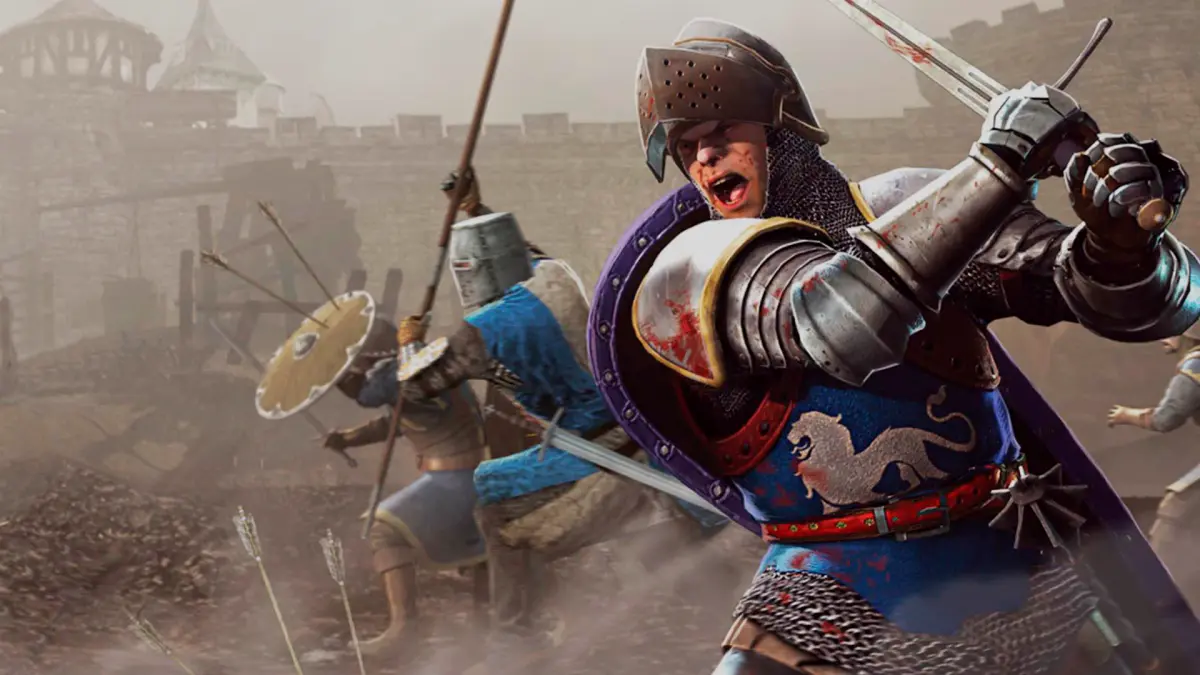
Gain battlefield dominance in Chivalry: Medieval Warfare by understanding and exploiting cross-class synergies between different warrior roles.
While mastering a single class in Chivalry: Medieval Warfare is commendable, true battlefield dominance often stems from understanding and exploiting the inherent synergies between different classes. A well-coordinated team, leveraging each class's strengths to cover weaknesses, can turn the tide of any skirmish or objective push. This section delves into specific, actionable strategies for combining classes to maximize your team's effectiveness.
Vanguard & Archer: The Harassment & Flank
This pairing excels at disrupting enemy lines and picking off high-value targets. The Vanguard's speed and flanking potential create openings, while the Archer provides crucial ranged support.
- Vanguard's Role: Your primary goal is to draw attention and create chaos. Utilize weapons like the Greatsword or Halberd for wide, sweeping attacks that can hit multiple enemies.
- Archer's Role: Position yourself at a safe distance, ideally on elevated ground or behind cover. Focus fire on enemies engaged with your Vanguard, particularly those with heavy armor or who are attempting to retreat. The Longbow is excellent for sustained pressure, while the Crossbow offers higher burst damage against armored foes.
- Strategy:
- Initial Engagement: The Vanguard charges a flank or a less-defended part of the enemy line, using their speed to bypass the main front.
- Drawing Aggro: Engage 1-2 enemies, focusing on quick strikes and dodges to stay alive and keep their attention.
- Archer's Opportunity: As enemies turn to face the Vanguard, they expose their backs or sides. The Archer capitalizes on this, aiming for headshots or unarmored areas. Prioritize targets that are actively swinging at your Vanguard.
- Vanguard's Follow-up: If the Archer lands a critical hit, the Vanguard can press the advantage, often securing a kill with a single well-placed swing.
- Disengage/Relocate: If overwhelmed, the Vanguard should use their speed to disengage and regroup with the Archer, finding a new angle of attack.
Knight & Man-at-Arms: The Unstoppable Push
This duo forms a formidable front-line force, combining the Knight's resilience and area control with the Man-at-Arms' agility and quick strikes. Ideal for breaking through chokepoints or holding critical objectives.
- Knight's Role: Act as the immovable object. Wield heavy, defensive weapons like the Two-Handed Sword or Poleaxe. Your primary objective is to absorb damage, block incoming attacks, and create space.
- Man-at-Arms' Role: The agile striker. Equip fast, one-handed weapons such as the Arming Sword or Mace, often paired with a shield. Your role is to dart in and out, exploiting openings created by the Knight.
- Strategy:
- Forming the Wall: The Knight advances, shield up (if using one) or blocking with their heavy weapon. Their presence forces enemies to commit.
- Man-at-Arms' Flurry: As enemies focus on the Knight, the Man-at-Arms circles around or dashes through the Knight's defensive stance. Deliver quick, precise strikes to exposed enemies. The Man-at-Arms' dodge ability is crucial for avoiding counter-attacks.
- Target Prioritization: The Knight should aim to disrupt groups with wide swings, while the Man-at-Arms focuses on single targets, especially those attempting to bypass the Knight.
- Objective Control: On maps like Stoneshill (attacking the gate) or Battlegrounds (holding the central courtyard), this pairing can effectively lock down an area. The Knight holds the line, and the Man-at-Arms picks off anyone trying to slip past.
- Retreat & Regroup: If the Knight's health gets low, the Man-at-Arms can provide cover fire with their secondary weapon (e.g., throwing axes) while the Knight retreats to heal.
Archer & Man-at-Arms: The Skirmish & Support
This dynamic duo excels at hit-and-run tactics, harassing enemies, and providing quick support. It's less about direct confrontation and more about attrition and opportunistic kills.
- Archer's Role: Provide consistent ranged damage and suppress enemy advances. The Javelin or Shortbow are excellent for mobile engagements.
- Man-at-Arms' Role: Act as a bodyguard and close-quarters deterrent. Use a fast weapon like the Short Sword or Falchion, and always be ready to intercept enemies attempting to reach the Archer.
- Strategy:
- Archer's Opening Volley: The Archer initiates combat by firing at approaching enemies, softening them up.
- Man-at-Arms' Interception: If an enemy closes the distance, the Man-at-Arms steps in, engaging them directly. Use dodges and quick attacks to keep the enemy off balance.
- Archer's Follow-up: While the Man-at-Arms is engaged, the Archer continues to fire at the same target, or switches to another threat if the Man-at-Arms has it handled. Aim for the enemy's back or head for maximum damage.
- Kiting & Retreat: If the Man-at-Arms is overwhelmed, both use their speed to retreat, creating distance for the Archer to continue firing. This is particularly effective in open areas of maps like Moor or Citadel.
- Objective Defense: This pairing is excellent for defending specific points, with the Archer raining down arrows from a vantage point (e.g., the walls of the Citadel) and the Man-at-Arms defending the access points below.
Knight & Vanguard: The Hammer & Anvil
A powerful combination for breaking through heavily defended positions. The Knight acts as the "anvil," holding the line, while the Vanguard is the "hammer," delivering devastating flanking attacks.
- Knight's Role: Engage the primary enemy force head-on. Use the Messer or Longsword to deal heavy damage and absorb incoming blows. Your goal is to keep enemies focused on you.
- Vanguard's Role: Circle around the main engagement, seeking an opportune moment to strike from the sides or rear. The Claymore or Zweihander are perfect for wide, cleaving attacks that can hit multiple unsuspecting enemies.
- Strategy:
- Knight's Advance: The Knight pushes directly into the enemy formation, drawing their attention and forcing them to commit to a frontal engagement.
- Vanguard's Flank: While the Knight is holding the line, the Vanguard uses their speed to move around the engagement, ideally through a less-guarded path (e.g., a side alley on Stoneshill or a path through the trees on Moor).
- Coordinated Strike: The Vanguard charges into the enemy's rear or flank, unleashing powerful overheads or horizontal swings. This often causes panic and breaks enemy formations.
- Knight's Pressure: As the Vanguard attacks from behind, the Knight presses their frontal assault, catching enemies in a pincer movement.
- Exploiting Disarray: Focus on enemies who turn to face the Vanguard, leaving their backs exposed to the Knight, or vice-versa. This synergy is devastating for breaking through objective defenses.
100% Human-Written. AI Fact-Checked. Community Verified. Learn how AntMag verifies content