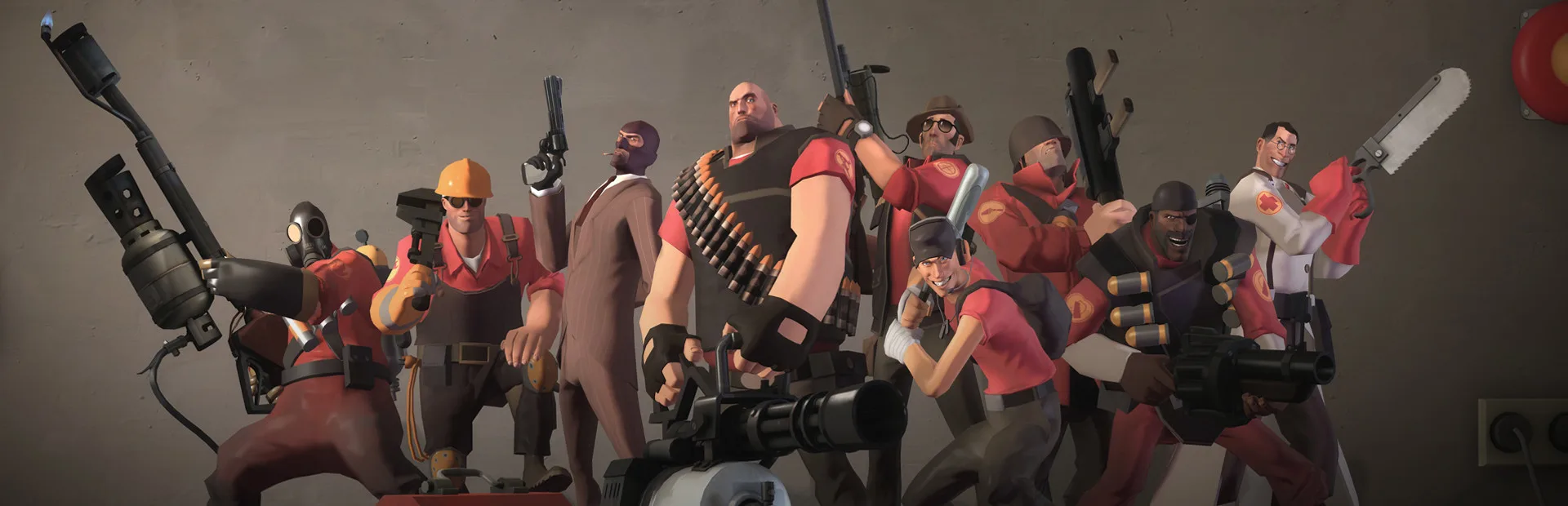
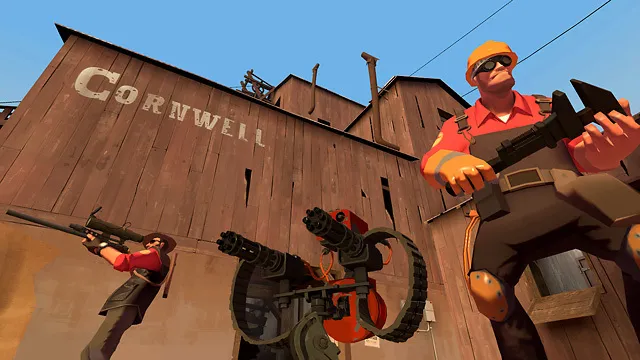
Distinguish between projectile and hitscan mechanics in Team Fortress 2. Adapt your aiming and positioning for peak combat effectiveness with each weapon type.
Understanding the fundamental differences between projectile and hitscan weapons is paramount to mastering combat in Team Fortress 2. Each type demands distinct aiming techniques, positioning strategies, and even class choices. Ignoring these mechanics will severely limit your effectiveness on the battlefield.
Hitscan Weapons: Instant Impact
Hitscan weapons register damage the instant the trigger is pulled, provided your crosshair is directly over the enemy. There is no travel time for the "bullet" or "beam." This makes them ideal for close-range engagements and for players with precise twitch aim.
- Classes that primarily use Hitscan:
- Scout: Scattergun, Pistol, Force-A-Nature. The Scout relies heavily on hitscan for his high burst damage at close range.
- Heavy: Minigun, Shotgun. While the Minigun has a spin-up time, its bullets are hitscan.
- Sniper: Sniper Rifle (when unscoped), SMG. The Sniper Rifle becomes hitscan when fully charged and scoped in, making headshots instantly lethal.
- Engineer: Shotgun, Pistol, Sentry Gun. The Sentry Gun's bullets are also hitscan, making it a formidable defensive tool.
- Medic: Syringe Gun, Blutsauger, Crossbow (though the Crossbow is a projectile, its primary fire is often used for healing at range).
- Spy: Revolver, Ambassador, Enforcer. The Ambassador rewards precise headshots with critical damage.
- Actionable Strategies for Hitscan:
- Close the Distance: As a Scout or Heavy, get as close as possible to maximize damage falloff and ensure more pellets connect.
- Practice Tracking: For weapons like the Minigun or SMG, practice keeping your crosshair on a moving target.
- Flick Shots: For the Sniper Rifle or Scattergun, develop the ability to quickly "flick" your mouse to a target's head or body for instant damage.
- Ambush Tactics: Utilize corners and environmental cover to surprise enemies and unleash immediate hitscan damage.
- Countering Projectiles: Hitscan weapons can be excellent for taking down projectile-based classes like Soldiers and Demomen before their slower projectiles reach you.
Projectile Weapons: Anticipation is Key
Projectile weapons fire physical objects that travel through the air, taking time to reach their target. This introduces a "lead" factor, where you must aim ahead of a moving enemy to account for the travel time. Mastering projectiles requires predicting enemy movement and understanding projectile speed.
- Classes that primarily use Projectiles:
- Soldier: Rocket Launcher, Direct Hit, Black Box. Rockets are relatively slow, requiring significant leading.
- Demoman: Grenade Launcher, Stickybomb Launcher, Loch-n-Load. Grenades and stickybombs have distinct arcs and travel speeds.
- Pyro: Flamethrower (short-range, wide-spread projectile), Flare Gun, Detonator. Flares have a noticeable arc and travel time.
- Engineer: Grenades from the Grenade Launcher (if using the stock loadout, though most Engineers use the Shotgun).
- Medic: Crusader's Crossbow. This weapon fires a healing bolt with a significant arc and travel time, requiring precise aiming for long-range heals or damage.
- Actionable Strategies for Projectiles:
- Lead Your Shots: This is the most crucial skill. Observe enemy movement patterns and aim where they will be, not where they currently are. Practice on bots or in training maps to develop this intuition.
- Area Denial: Projectiles, especially from the Demoman's Stickybomb Launcher or the Soldier's Rocket Launcher, are excellent for denying areas, forcing enemies to move into predictable paths, or preventing pushes.
- Splash Damage: Many projectiles, like rockets and grenades, deal splash damage. Aim for the ground near enemies or clustered groups to maximize damage, even if you don't get a direct hit.
- Arc Management: For weapons like the Grenade Launcher or Flare Gun, learn the projectile's arc. Practice shooting over obstacles or around corners.
- Juggling: With rockets, you can often "juggle" enemies by hitting them with splash damage, launching them into the air, and then following up with another rocket or a direct hit.
- Rocket Jumping/Sticky Jumping: Projectile weapons offer unique mobility options. Master these techniques to access advantageous positions or escape dangerous situations.
Hybrid Weapons & Special Cases
Some weapons blur the lines or have unique mechanics:
- Sniper Rifle (Scoped): While technically hitscan when fully charged, the act of scoping in and holding a charge introduces a different rhythm than other hitscan weapons.
- Shortstop (Scout): Fires a tighter spread of pellets than the Scattergun, making it feel more like a precise hitscan weapon at slightly longer ranges.
- Loose Cannon (Demoman): Fires cannonballs that can "double-dab" (hit an enemy twice) and have a unique knockback effect, requiring precise timing and aiming.
- Beggar's Bazooka (Soldier): Fires a volley of rockets, but requires charging up, making it a projectile weapon with a unique firing mechanic that requires anticipating enemy movement over a longer period.
Ultimately, success in Team Fortress 2 hinges on understanding and adapting to both projectile and hitscan mechanics. Experiment with different classes and weapons, practice your aim, and learn to predict enemy movements to dominate the battlefield.
100% Human-Written. AI Fact-Checked. Community Verified. Learn how AntMag verifies content