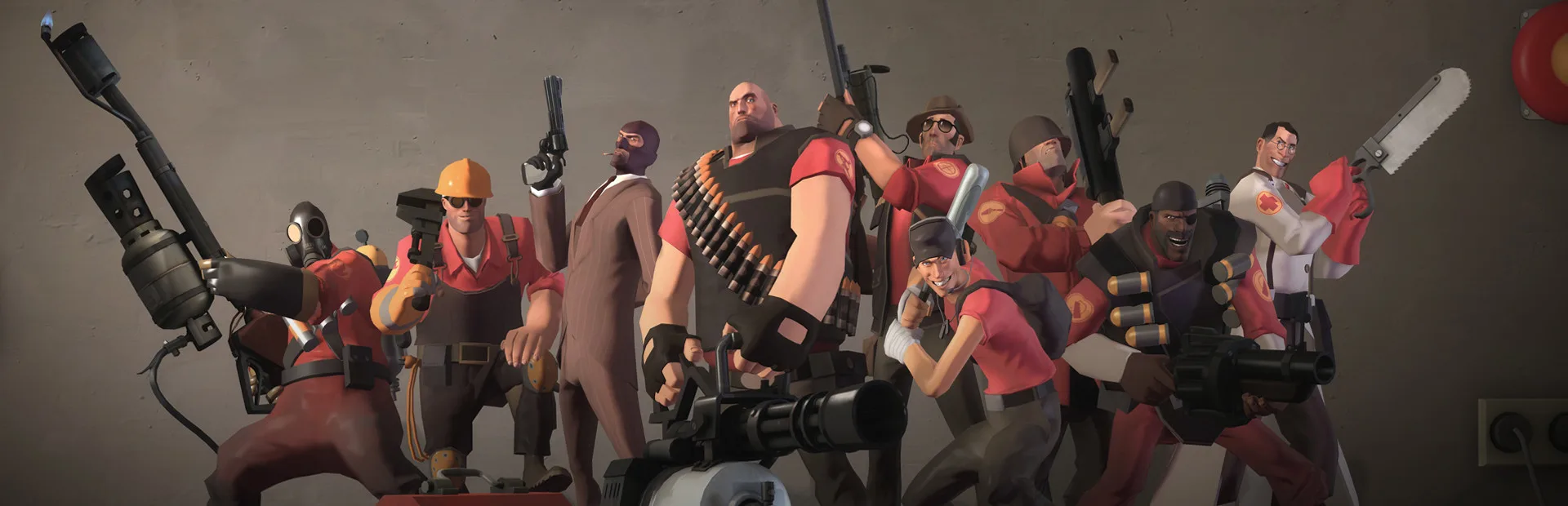
Analyze Team Fortress 2 weapon attributes and stats. Understand weapon cards to interpret nuanced stats and leverage them for optimal class playstyles.
Understanding your weapon's attributes and stats is paramount to mastering any class in Team Fortress 2. While the base damage and fire rate are crucial, the nuanced attributes often dictate optimal playstyles and tactical decisions. This section will break down how to interpret these stats and leverage them for maximum effectiveness.
1. Interpreting Weapon Cards
Every weapon in your loadout screen displays a detailed card outlining its unique properties. Don't just skim these! Pay close attention to both the positive (green text) and negative (red text) attributes, as they fundamentally alter how a weapon performs compared to its stock counterpart.
- Positive Attributes (Green): These are buffs that enhance a weapon's capabilities. For example, the Soldier's Direct Hit boasts "+25% damage vs. Sentry Guns" and "+80% projectile speed." This immediately tells you it's a superior choice for Sentry busting and long-range engagements due to its faster rockets.
- Negative Attributes (Red): These are debuffs that balance out a weapon's strengths. The Direct Hit, for instance, also has "-25% explosion radius." This means while it's great for precision, it's less effective against groups of enemies or for splash damage. Always weigh these drawbacks against the benefits.
- Neutral Attributes (White): These are often informational, like "No random critical hits" or "Wearer cannot pick up health packs." They don't inherently buff or debuff but change a core gameplay mechanic.
2. Key Statistical Categories
Beyond the unique attributes, several core statistical categories are present across most weapons. Knowing what these mean and how they interact is vital.
- Damage: The raw amount of health removed per hit. This can be further broken down by range (e.g., shotguns deal more damage up close).
- Critical Hits: Most weapons have a chance for random critical hits, dealing 3x normal damage. Some weapons, like the Eyelander for Demoman, guarantee critical hits under specific conditions (e.g., after collecting enough heads).
- Mini-Crits: These deal 1.35x normal damage and are often granted by specific buffs (e.g., from a Jarate-soaked enemy or a Buff Banner Soldier).
- Fire Rate/Attack Speed: How quickly a weapon can be fired or swung. A high fire rate can compensate for lower damage per shot, especially for classes like the Heavy with his Minigun.
- Reload Speed: The time it takes to replenish a weapon's ammunition. Weapons with slow reload speeds, like the Rocket Launcher, require careful timing.
- Clip Size/Ammo Capacity: The number of shots before a reload is needed, and the total amount of ammunition carried. Weapons like the Scattergun have a small clip but high burst damage, while the Minigun has a massive clip for sustained fire.
- Projectile Speed: Relevant for weapons that fire projectiles (rockets, grenades, syringes). Faster projectiles are easier to hit moving targets with and reduce the need for extensive lead-aiming. The Soldier's Liberty Launcher, for example, has a "+40% projectile speed" bonus, making it more forgiving.
- Spread: How widely bullets or pellets disperse. Shotguns and Scatterguns have significant spread, making them effective up close but less so at range. The Engineer's Frontier Justice, while powerful after Sentry kills, still adheres to standard shotgun spread mechanics.
3. Actionable Strategies Based on Stats
Once you understand the stats, you can apply them to your gameplay:
- Loadout Optimization: Before a match, consider the map and enemy team composition. If you're facing a lot of Engineers, a Soldier equipped with the Direct Hit is a strong choice. If you need to push a chokepoint, a Demoman with the Loch-n-Load (which has a smaller clip but deals more damage to buildings) might be effective, but be mindful of its reduced blast radius against players.
- Situational Awareness: During gameplay, constantly evaluate your current weapon's strengths and weaknesses. If you're a Pyro with the Backburner (which grants critical hits from behind), actively seek flanks. If you're a Sniper with the Huntsman (which has a slower projectile but can be charged for more damage), aim for headshots and lead your targets.
- Counter-Picking: Knowing enemy weapon stats can help you counter them. A Heavy with a Natascha (which slows enemies on hit) can be a nightmare for fast-moving Scouts. As a Scout, you might consider the Bonk! Atomic Punch to bypass them or flank from an unexpected angle.
- Resource Management: Weapons with limited ammo or slow reload times (like the Sniper's Machina, which fires tracer rounds and pierces enemies but has a slower charge rate) demand careful shot placement and awareness of nearby ammo packs.
By delving into these detailed weapon attributes and stats, you'll move beyond simply "shooting" and begin to truly master the tactical depth of Team Fortress 2's arsenal.
100% Human-Written. AI Fact-Checked. Community Verified. Learn how AntMag verifies content