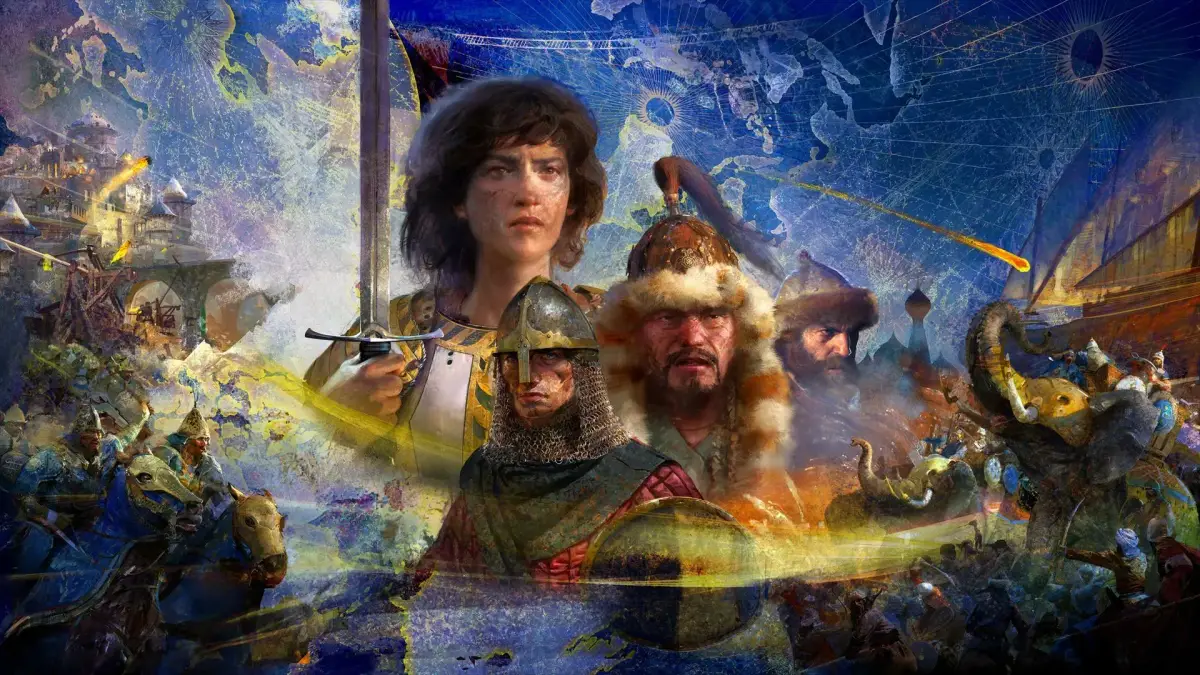
Explore the historical periods of ancient Greece, from the Bronze Age to the Hellenistic Period, and their impact on civilization and warfare in Age of Empires IV.
The history of ancient Greek culture is divided into several periods: the Bronze Age (2100 to 1200 B.C.), the Dark Age (1200 to 800 B.C.), the Archaic Period (800 to 500 B.C.), the Classical Age (500 to 336 B.C.), and the Hellenistic Period (336 to 30 B.C.).
The Bronze Age saw the rise of the first cities on the mainland. These were predominately fortified palaces on hilltops. This culture was named after its greatest citadel, Mycenea. Excavation of Mycenea by Heinrich Schlieman in the 1870s revealed fabulous burial tomb treasures. The Mycenean culture disappeared around 1200 B.C. following attacks by barbarians. The city of troy was also sacked around this time.
The catastrophe of 1200 B.C. devastated the economy of Greece and ushered in a Dark Age that lasted about 400 years. Gradually civilization reappeared at old sites, such as Athens, and at new sites such as Sparta and Corinth.
By 800 B.C., the city- states of the mainland were economic and military powers. During the next 300 years, the Archaic Period, the Greeks expanded by establishing colonies across the Aegean in Anatoloa (Ionia) and along the central and western Mediterranean coasts. They vied with the Phoenicians for colony sites and trade. The Archaic Period came to an end when the rising eastern power of Persia came into conflict with the Greeks over the Anatolian coast.
The period of 500 to 336 B.C. was the Classical Age of Greece, dominated first by wars with Persia and then the Peloponnesian civil war between Athens and Sparta. Although this period is defined by military events, it was also a time of many important cultural advances.
The Hellenistic Period takes its name from the Greek word Hellene (meaning Greek). This period began with the installation of Alexander as king of Macedon following the assassination of his father. In 13 years of military campaigns, Alexander conquered most of the known world and spread the Greek culture behind his armies. After Alexander's premature death in 323 B.C., his empire was eventually divided into three parts. Although these parts fought each other and gradually shrank due to rebellion and attack, the culture of the civilized world remained primarily Greek.
100% Human-Written. AI Fact-Checked. Community Verified. Learn how AntMag verifies content