
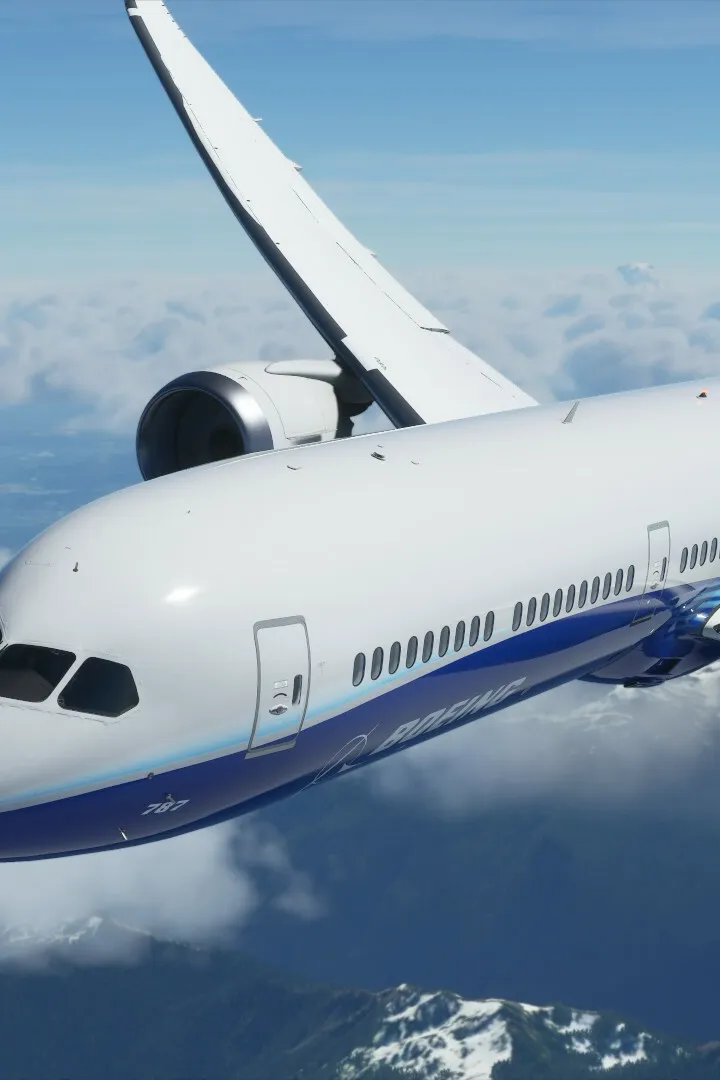
Learn the essential flight controls for Microsoft Flight Simulator. This guide covers basic handling, pitch, roll, power settings, and straight and level flight.
This guide covers the basic flight controls and mechanics within Microsoft Flight Simulator, focusing on the foundational lessons designed to teach new pilots how to fly.
| Action | Button |
|---|---|
| Yoke (Ailerons & Elevator) | Controlled by yoke movement |
| Rudder Pedals (Rudder & Ground Steering) | Controlled by rudder pedals |
| Throttle & RPM | Throttle lever and RPM indicator (tachometer) |
| Airspeed Indicator | Instrument displaying airspeed |
| Altimeter | Instrument displaying altitude |
| Pitch Control (Climb, Cruise, Descend) | Elevator, controlled by yoke |
| Turn Control (Roll) | Ailerons, controlled by yoke, with rudder for coordination |
| Camera Controls | Toolbar menu, cursor interaction |
The Flight Training section includes various lesson series such as Basic Handling, Take-off and Landing, VFR Navigation, Glider Training, Airliner Training, Bush Pilot, and IFR Navigation. Each series is composed of multiple lessons, often culminating in a test without guidance aids.
The Basic Handling series, flown in the Cessna 152, includes lessons on:
- Introduction: Simulator controls, camera manipulation, instrument interaction, and toolbar menu usage.
- Aircraft Essentials: Familiarization with the yoke, rudder pedals, throttle, RPM indicator, airspeed indicator, and altimeter.
- Familiarization Flight: Basic maneuvers like pitching and turning, with a focus on the Sedona airport surroundings.
- Attitude (Pitch): Understanding and controlling climb, cruise, and descent attitudes, and their relation to speed.
- Turns (Roll): Executing turns using the yoke and rudder for coordination, referencing the attitude indicator for bank angle.
100% Human-Written. AI Fact-Checked. Community Verified. Learn how AntMag verifies content