
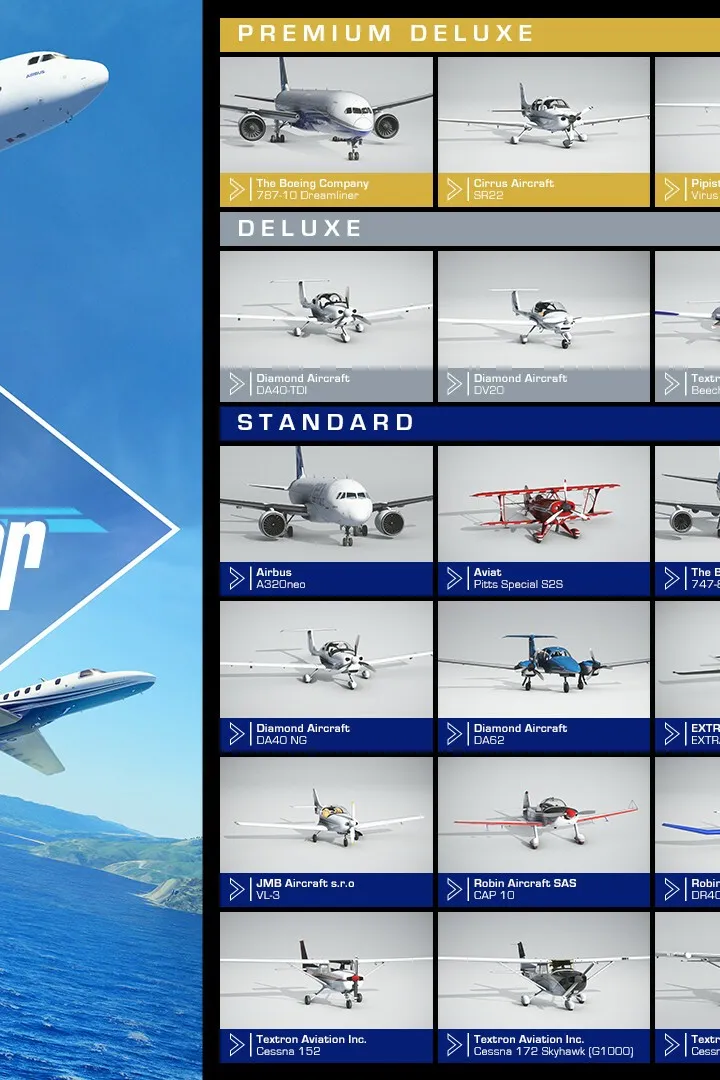
Master takeoff and landing procedures in Microsoft Flight Simulator. Follow detailed steps for smooth departures, arrivals, and post-landing taxiing.
Mastering takeoffs and landings is fundamental to becoming a proficient pilot in Microsoft Flight Simulator. This section provides detailed, actionable steps to ensure smooth departures and arrivals, covering everything from pre-flight checks to post-landing taxiing.
Takeoff Procedures
A successful takeoff requires careful preparation and execution. Follow these steps for a safe and efficient departure:
Pre-Takeoff Checklist
- Aircraft Systems: Ensure all essential systems are operational. Check your Garmin G1000/G3000 for any warnings or alerts.
- Flaps: Set flaps to the appropriate takeoff setting. For most light aircraft, this is typically 10-20 degrees. Consult your aircraft's specific manual (accessible via the Aircraft Information Panel in the cockpit) for precise recommendations.
- Trim: Set elevator trim to the takeoff position. This is crucial for maintaining pitch control during rotation.
- Parking Brake: Engaged. You'll release this just before applying full power.
- Runway Alignment: Position your aircraft precisely on the runway centerline. Use the External View (F11) for a clear perspective if needed.
The Takeoff Roll
- Throttle Up: Smoothly advance the throttle to full power. Monitor engine instruments for normal operation.
- Maintain Centerline: Use rudder pedals (or joystick twist) to counteract P-factor and maintain runway centerline. This is especially important in taildraggers or high-powered aircraft.
- Rotate: As you reach your aircraft's rotation speed (Vr), gently pull back on the yoke to raise the nose. Vr varies by aircraft and weight; refer to your aircraft's V-speeds chart.
- Climb Out: Establish a positive rate of climb. Aim for your aircraft's best rate of climb speed (Vy) to gain altitude efficiently. For mountain flying, as seen in scenarios around Atlanta, Idaho (e.g., ICAO: S81), maintaining Vy is critical to clear terrain.
- Retract Landing Gear: Once a positive rate of climb is established and you're clear of obstacles, retract the landing gear.
- Retract Flaps: At a safe altitude and speed, gradually retract flaps in stages. Avoid retracting them all at once, as this can cause a sudden loss of lift.
Landing Procedures
A controlled and smooth landing is the hallmark of a skilled pilot. Precision and anticipation are key.
Approach Planning
- Airport Information: Before beginning your descent, gather critical airport information. This includes runway length, elevation, wind direction, and any terrain obstacles (e.g., the "huge hill" at Atlanta, Idaho).
- Traffic Pattern: Enter the traffic pattern at the recommended altitude (typically 1000 feet above airport elevation).
- Speed Control: Begin reducing airspeed and applying initial flap settings on the downwind leg.
The Landing Sequence
- Downwind Leg: Maintain pattern altitude and airspeed. Begin configuring for landing by deploying the first stage of flaps.
- Base Leg: Turn onto the base leg. Deploy additional flaps as needed and begin a gradual descent. Aim to be at a good altitude and speed to make the runway.
- Final Approach: Turn onto the final approach. Align with the runway centerline.
- Flaps: Deploy full flaps (or as recommended for your aircraft and conditions).
- Landing Gear: Ensure landing gear is down and locked. Verify with the gear indicator lights.
- Airspeed: Maintain your aircraft's recommended approach speed (Vref). This is often 1.3 times the stall speed in landing configuration.
- Glide Slope: Adjust power and pitch to maintain a stable glide slope to the runway threshold. Use the Primary Flight Display (PFD) for guidance on instruments.
- Flare: As you cross the runway threshold, gradually reduce power to idle and gently raise the nose slightly to slow your descent rate. Aim to touch down on the main landing gear first.
- Touchdown: Gently touch down on the main wheels, then allow the nose wheel to settle onto the runway.
- Braking & Rollout: Apply brakes smoothly and use rudder pedals for directional control to maintain the runway centerline. Exit the runway at a safe taxi speed.
- Taxi to Parking: Follow airport signage or ATC instructions to your designated parking spot. Retract flaps and turn off landing lights once clear of the active runway.
Remember, practice is paramount. Utilize the Replay Feature to review your takeoffs and landings, identifying areas for improvement. Happy flying!
100% Human-Written. AI Fact-Checked. Community Verified. Learn how AntMag verifies content