
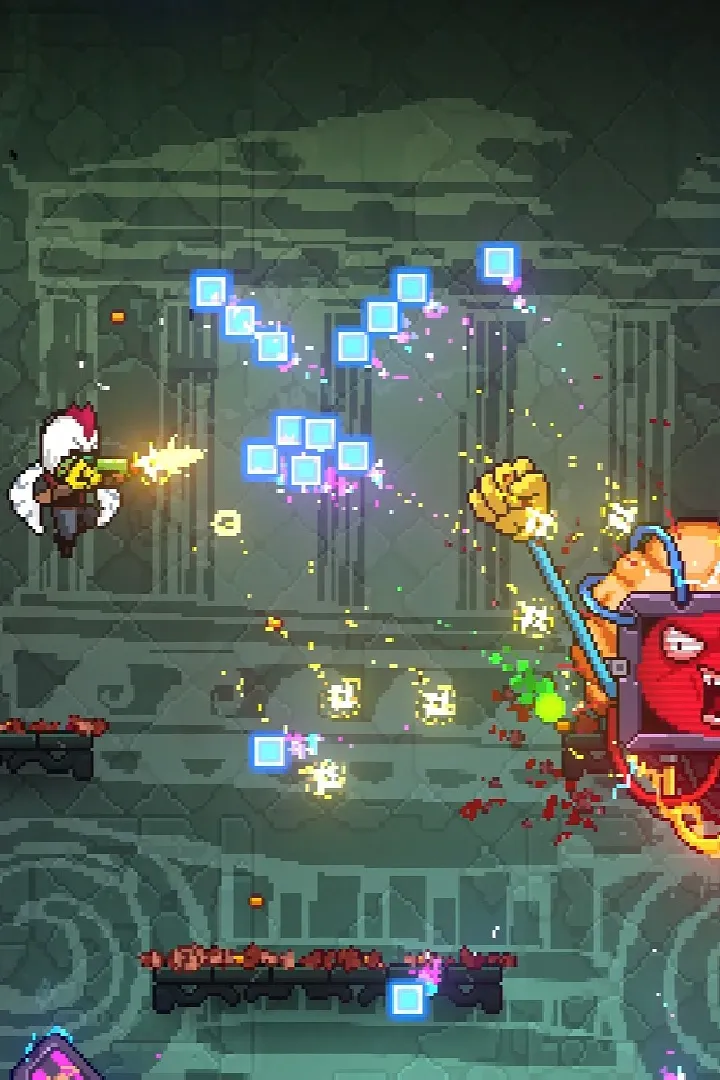
Improve your early Neon Abyss runs with essential tips on weapon evaluation, prioritizing upgrades, and effective early combat strategies.
Embarking on your first descent into the Neon Abyss can be a daunting experience. The game's rapid pace, randomized environments, and challenging enemies are designed to test your reflexes and strategic thinking from the outset. Many new players find themselves overwhelmed by the sheer volume of information and the unforgiving nature of the early stages. However, with a few key strategies and a focus on fundamental mechanics, you can significantly improve your chances of survival and build a solid foundation for future runs. This section provides essential tips for navigating the initial challenges of Neon Abyss, helping you to not only stay alive but also to start gathering the resources and knowledge needed to progress deeper into the game.
A critical piece of advice for new players, as suggested by the source material, is to understand that not every new weapon found is necessarily an improvement over your starting gear. The default weapon, often referred to as the "Seagull," can be surprisingly effective, especially when augmented by passive items. Therefore, resist the urge to blindly swap out your current weapon for any new one you discover. Instead, take a moment to evaluate its strengths and weaknesses. Does it have a faster firing rate? Does it deal more damage? Does it come with a unique bonus skill? Consider how these attributes compare to your current weapon and the types of enemies you are encountering. Sometimes, a weapon with a slower firing rate but higher damage might be less effective against a horde of fast-moving enemies than your default weapon. Prioritize understanding your current arsenal and how it synergizes with the passive items you acquire before making drastic changes.
Prioritizing Essential Upgrades
In the early stages of Neon Abyss, your primary goal should be to secure essential upgrades that enhance your survivability and damage output. This means carefully considering which items to pick up and which to leave behind. While it's tempting to grab every item you see, focus on those that offer immediate and tangible benefits. For instance, passive items that increase your base health, damage, or movement speed are invaluable. Don't underestimate the power of even small stat increases; they can accumulate over time and make a significant difference in later encounters. When you find a new weapon, don't just equip it immediately. Assess its firing characteristics. Does it have a wide spread, making it good for crowd control, or a narrow, powerful beam, ideal for single targets? Compare it to your current weapon. If the new weapon's firing pattern or rate doesn't suit your playstyle or the current enemy composition, it might be better to stick with your current weapon and look for a more suitable upgrade later.
Another crucial aspect of early-game survival is understanding the role of currency and resources. While the source material doesn't detail specific currencies, most roguelikes feature some form of in-game currency used for purchasing items or upgrades. Learn how to efficiently gather these resources by defeating enemies and exploring rooms thoroughly. Prioritize spending your resources on items that offer the most significant impact. For example, if you have the option to buy a powerful weapon or a defensive trinket, consider which will help you survive the next few rooms more effectively. It's often a good strategy to invest in items that provide a consistent benefit, rather than those with a high risk and high reward, especially when you're still learning the ropes. Remember that failing a run isn't the end; it's an opportunity to learn and carry over knowledge for your next attempt.
Effective Early Combat Strategies
When you first enter the Abyss, your combat encounters will likely be against weaker enemies, but their numbers can still be overwhelming. The key is to maintain a controlled aggression. Don't rush headlong into groups of enemies. Instead, try to engage them in smaller numbers. Use the environment to your advantage; if there are narrow passages, try to funnel enemies through them so you can deal with them one or two at a time. Your dodge roll is your most important defensive tool. Practice using it to evade incoming projectiles and attacks. Many enemies have predictable attack patterns, so observing them and learning their tells is crucial. For example, a certain enemy might rear back before unleashing a projectile, giving you a window to dodge.
It's also important to understand the limitations of your early-game arsenal. Your starting weapon might not have the range or firepower to deal with enemies at a distance effectively. In such cases, you might need to close the gap cautiously, using your dodge roll to avoid damage while you get into optimal firing range. If you acquire a weapon with a wide spread, like a shotgun, use it to clear out groups of enemies that are close to you. If you find a weapon with a rapid fire rate, focus on dealing sustained damage to tougher enemies or quickly dispatching weaker ones. Don't forget about any active abilities or secondary weapons you might acquire early on. Even a simple grenade can be a lifesaver when you're surrounded. Use these limited resources wisely, saving them for moments when you truly need them to turn the tide of a difficult encounter.
100% Human-Written. AI Fact-Checked. Community Verified. Learn how AntMag verifies content