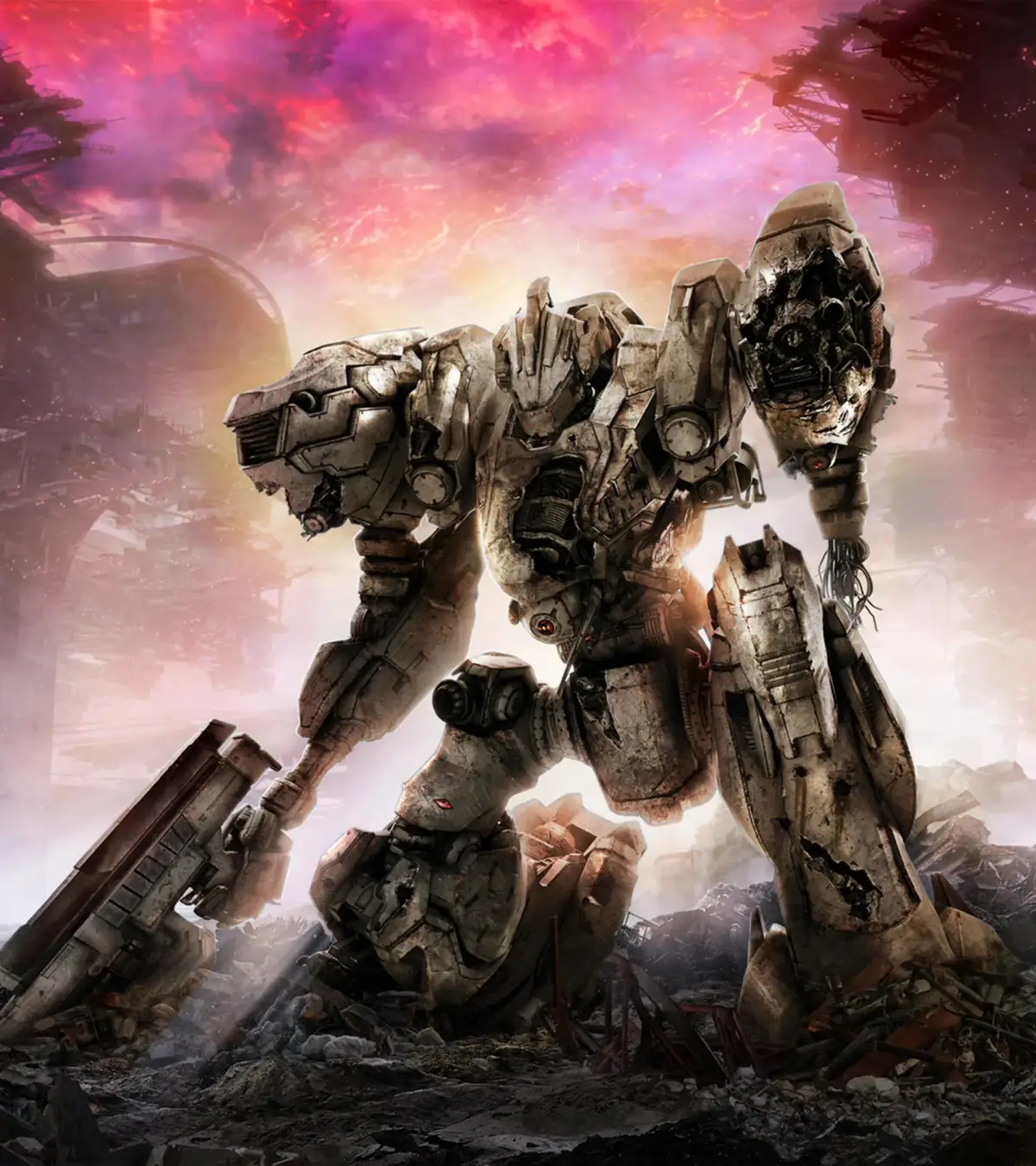
Master Armored Core VI: Fires of Rubicon with our expert AC build and strategy guide. Learn about frames, inner parts, energy efficiency, and weapon loadouts to dominate your opponents.
Hey there, future Raven! So you're diving into Armored Core VI: Fires of Rubicon and want to make sure your AC is more than just a pretty paint job? You've come to the right place. Think of me as your wingman, here to help you navigate the wild world of AC customization and combat strategy. We're not going to lecture you; we're going to figure this out together. Building a killer AC is all about understanding how the pieces fit together. It's not just about slapping on the biggest guns; it's a delicate dance between your frame, your inner workings, and the weapons you choose. Let's break it down. ### Frame: The Foundation of Your Beast First up, we've got the frame. This is made up of your HEAD, CORE, ARMS, and LEGS. These parts are the bedrock of your AC's performance. They dictate your base stats, like how much energy you're sipping and your weight capacity. Your ARMS can seriously impact how well your energy weapons perform, affecting stability and accuracy. The CORE and LEGS work together to determine your speed, how stable you are, and your overall durability (AP) and defenses. The HEAD is your electronic warfare suite – it controls your visual range, radar, how fast you lock onto targets, and your resistance to Electronic Countermeasures (ECM). ### Inner Parts: The Heart and Lungs of Your AC Now, let's talk about what makes your AC tick: the BOOSTERS, FCS (Fire Control System), and GENERATOR. These aren't just about going fast; they're crucial for energy management. Your AC uses a ton of energy just to exist, and these inner parts are where most of that drain comes from. You can't just slap on the most energy-hungry boosters and expect to keep up with everyone else. You'll quickly find yourself out of juice and needing to recharge, which is a death sentence in a firefight. You need to find that sweet spot between speed and energy efficiency. Think of it like this: pairing super-powered BOOSTERS with a weak GENERATOR is a recipe for disaster. Your GENERATOR might not be able to keep up, leaving you drained. On the flip side, a heavy frame with a massive, powerful GENERATOR might feel sluggish, even with great BOOSTERS, especially once you factor in your weapons. Weight is a big deal for mobility and turning speed. The heavier your AC, the more power it takes to move. While heavy ACs often have larger GENERATORs with more EN capacity, they can take significantly longer to recharge compared to lighter builds. It's all about balance. Your LEGS are key here too. They handle your AC's weight, but they also chew through energy. So, you need LEGS that can handle your AC's total weight without costing you too much EN. It's a constant balancing act. And don't underestimate the FCS! It affects how your AC moves and behaves, and even your energy efficiency. Some FCS are specialized – maybe they have amazing lock-on range but poor missile lock speed. Others offer a good all-around package but drain your energy faster. You'll want to match your FCS to your playstyle. For example, an FCS with a super-fast lock speed but short range means you'll need to get up close and personal. This pushes you towards weapons like assault rifles and machine guns, and BOOSTERS that let you dash in quickly. On the other hand, an FCS with a long lock range but slow lock speed means you'll want to hang back, using sniper rifles or fast missiles, and maybe BOOSTERS that help you retreat. Your FCS's ECM resistance is also important. It determines how long enemy ECM can mess with your targeting. While some skilled players can manage with manual aiming, the FCS is pretty much essential for using missiles effectively. ### Weaponry: Bringing the Pain An AC is built for war, but you can't just equip anything and expect to win. You need weapons that suit the mission and the enemy. You can either build an AC that's versatile enough for most situations or swap out weapons before each mission. The key is making sure your AC can actually use the weapons you choose effectively. Wasting ammo because your AC can't handle a weapon properly is a rookie mistake. Your weapons are split into four slots: Right Arm, Left Arm, Right Back, and Left Back. Shoulder slots are also available for extra gear. Generally, back-mounted weapons are more powerful than arm weapons, but they often have a more limited firing arc and can be heavier. Arm weapons are usually lighter, weaker, but have more ammo. If cannons aren't your thing, the back slots are perfect for various missiles – from standard ones to vertical missiles with better homing, scatter missiles, or heavy missiles that pack a serious punch. Shoulder slots are a mixed bag. You can equip offensive gear like extra missiles or rockets, or defensive items like ECM jammers or flares. Remember, weapons also consume energy, especially energy-based ones like EN rifles, laser blades, and Kojima weapons. This can really hurt your energy recovery. Weapon weight is also a factor. Heavy weapons like gatling guns or grenade launchers add to your AC's overall weight, affecting its stability. Even lighter weapons can impact how your AC handles, especially when turning. You'll notice a difference if you equip a light weapon on one arm and a heavy one on the other – your AC's turning behavior will change.100% Human-Written. AI Fact-Checked. Community Verified. Learn how AntMag verifies content