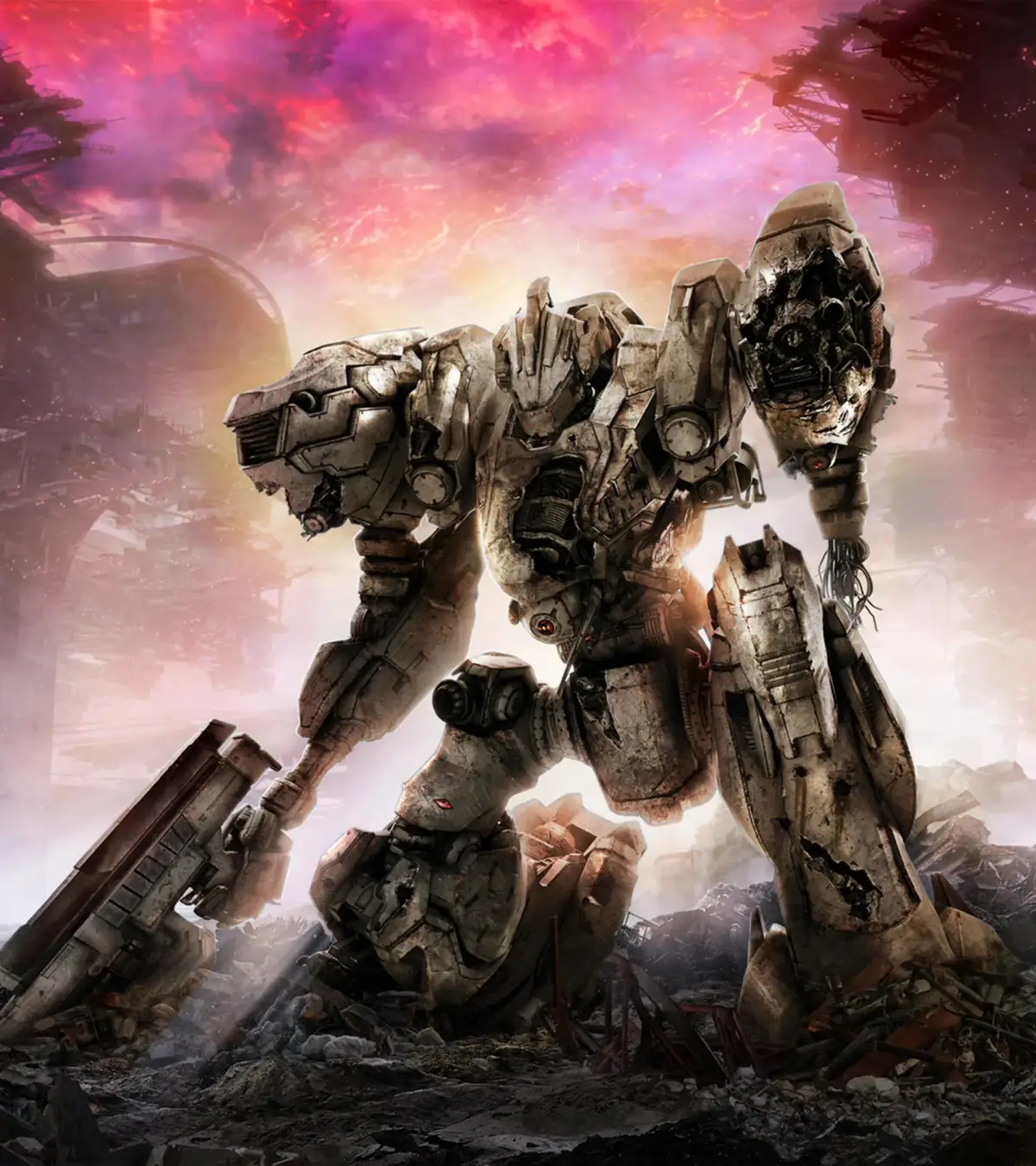
Master Armored Core VI: Fires of Rubicon by understanding AC Build Archetypes. Select the right AC build for your playstyle and combat strategy.
Mastering Armored Core VI: Fires of Rubicon requires a deep understanding of AC customization. Your choice of AC build archetype dictates your playstyle, mission effectiveness, and overall combat strategy. While countless variations exist, most ACs fall into one of three primary categories, each with distinct advantages and disadvantages. Experimentation is key to finding the archetype that best suits your preferred combat approach and the demands of specific missions.
1. Lightweight/Speedy Builds
These builds prioritize unparalleled mobility, evasion, and burst damage. They are designed for pilots who thrive on hit-and-run tactics, flanking maneuvers, and maintaining distance from heavy hitters. While incredibly agile, they sacrifice significant defensive capabilities and often rely on precise piloting to avoid incoming fire.
- Core Philosophy: Speed is life. Avoid damage through evasion rather than absorption.
- Key Leg Types:
- Reverse Joint (RJ): The quintessential lightweight leg. Offers exceptional jump height, quick boost capabilities, and often higher ground speed. Ideal for vertical combat, quickly repositioning, and dodging attacks. Examples: 06-042 MIND ALPHA, KASUAR/42Z.
- Lightweight Bipedal: Provides a good balance of ground speed and stability, often with decent EN load capacity for lighter weapons. Less jump-focused than RJs but still highly mobile. Examples: NACHTREIHER/42E, MELANDER C3.
- Boosters: High-output, low-EN consumption boosters are crucial for maximizing quick boost and assault boost efficiency. Look for high thrust and quick boost thrust. Examples: ALULA/21E, FLUEGEL/21Z.
- Weapons: Typically rapid-fire, high-impact, or close-range weapons that can deliver damage quickly before disengaging.
- Right Arm: Machine Guns (e.g., DF-MG-02 GATLING), Shotguns (e.g., SG-027 ZIMMERMAN), SMGs (e.g., VP-66LR).
- Left Arm: Similar to right arm, or a shield for emergency defense (e.g., VP-61PS).
- Shoulders: Missile Launchers (e.g., BML-G1/P20MLT-04 for burst damage), Laser Drones (e.g., VP-60LCS).
- Generators: Prioritize high EN output and supply recovery to fuel constant boosting. Examples: VP-20S, VP-20C.
- FCS: Short-range assist for close-quarters combat or long-range for missile builds. Examples: FCS-G2/P05BC (close-range), FCS-G2/P10SLT (long-range).
- Strengths: Unmatched speed and evasion, excellent for flanking, high burst damage potential, excels in arena combat against slower ACs.
- Weaknesses: Extremely fragile, highly susceptible to sustained fire, requires precise piloting, limited carrying capacity for heavy weapons.
- Common Pitfalls: Over-committing to attacks, running out of EN, getting caught in sustained enemy fire.
2. Medium/Balanced Builds
The workhorse of Rubicon, balanced builds offer a versatile approach to combat, capable of adapting to various mission parameters. They strike a compromise between speed, defense, and firepower, making them suitable for a wide range of engagements. This archetype is often recommended for new pilots as it provides a forgiving learning curve.
- Core Philosophy: Adaptability and sustained combat. A jack-of-all-trades, master of none.
- Key Leg Types:
- Bipedal: The most common leg type, offering a good balance of mobility, stability, and load capacity. Can be customized for slightly lighter or heavier applications. Examples: MELANDER C3, DF-LG-08 TIAN-QIANG.
- Light Tetrapod: Offers limited hovering capabilities and increased stability for firing heavy weapons, while maintaining decent ground speed. Examples: VP-422.
- Boosters: A balance between thrust and EN efficiency. Look for boosters that provide reliable quick boost and assault boost without draining EN too quickly. Examples: BC-0600 2CST, BOOSTER: IB-C03B: NGI 001.
- Weapons: A mix of reliable damage dealers, often including a primary kinetic weapon, an energy weapon, and missile support.
- Right Arm: Assault Rifles (e.g., DF-AR-01 GALE), Rifles (e.g., VP-66LH), Bazookas (e.g., DF-BA-06 FANG).
- Left Arm: Similar to right arm, or a shield (e.g., EL-PS-00 STEADFAST).
- Shoulders: Missile Launchers (e.g., BML-G1/P07VTC-06), Grenade Launchers (e.g., DF-GR-07 GOU-CHEN), Laser Cannons (e.g., VP-60LCS).
- Generators: Balanced EN output and capacity to support varied weapon use and boosting. Examples: VP-20S, VP-20C.
- FCS: All-rounder FCS that provides decent assist for both short and medium ranges. Examples: FCS-G1/P01.
- Strengths: Highly adaptable, good survivability, consistent damage output, forgiving for new players.
- Weaknesses: Lacks the extreme specialization of lightweight or heavy builds, can be outmaneuvered by speed builds or out-tanked by heavy builds.
- Common Pitfalls: Trying to do everything at once, not optimizing for specific mission objectives.
3. Heavy/Tanky Builds
These builds are the immovable objects of Rubicon, designed to absorb massive amounts of damage while delivering devastating, sustained firepower. They sacrifice almost all mobility for unparalleled durability and the ability to wield the heaviest, most destructive weapons in the game. Ideal for pilots who prefer to stand their ground and unleash a torrent of destruction.
- Core Philosophy: Withstand everything and obliterate the opposition.
- Key Leg Types:
- Tank Treads: Offers the highest AP and attitude stability, allowing for continuous firing of heavy weapons without being staggered. Extremely slow but incredibly resilient. Examples: EL-TL-11 STANDARD, LG-011 JIUQU.
- Heavy Tetrapod: Provides substantial AP and load capacity, often with the unique ability to hover for extended periods, creating a stable firing platform. Examples: VP-424, LG-022T BORNEMISSZA.
- Heavy Bipedal: A heavier version of bipedal legs, offering more AP and load capacity than medium bipedals, but at a significant mobility cost. Examples: DF-LG-08 TIAN-QIANG, LG-033M VERRILL.
- Boosters: Mobility is a secondary concern; focus on boosters that offer decent assault boost for closing distances or escaping, but don't expect high quick boost performance. Examples: BC-0400 MULE, BC-0600 2CST.
- Weapons: The biggest, baddest weapons available, designed for sustained damage and staggering.
- Right Arm: Gatling Guns (e.g., DF-GA-08 HU-BEN), Bazookas (e.g., DF-BA-06 FANG), Grenade Launchers (e.g., 44-141 JVLN ALPHA).
- Left Arm: Similar to right arm, or a heavy shield (e.g., EL-PS-00 STEADFAST).
- Shoulders: Dual Shoulder Cannons (e.g., VP-60LCS, SONGBIRDS), Plasma Missile Launchers (e.g., BML-G1/P07VTC-06).
- Generators: High EN capacity and output to power heavy energy weapons and sustain boosting. Examples: VP-20C, IB-C03G: NGI 000.
- FCS: Often medium to long-range assist to maximize the effectiveness of heavy, slower projectiles. Examples: FCS-G2/P10SLT.
- Strengths: Extremely durable, high sustained damage, excellent for breaking enemy ACs, can easily stagger bosses, ideal for defensive objectives.
- Weaknesses: Very slow and cumbersome, highly susceptible to fast-moving enemies and flanking attacks, difficult to evade area-of-effect attacks.
- Common Pitfalls: Getting overwhelmed by multiple fast enemies, failing to manage weapon heat, getting stuck in unfavorable positions.
100% Human-Written. AI Fact-Checked. Community Verified. Learn how AntMag verifies content