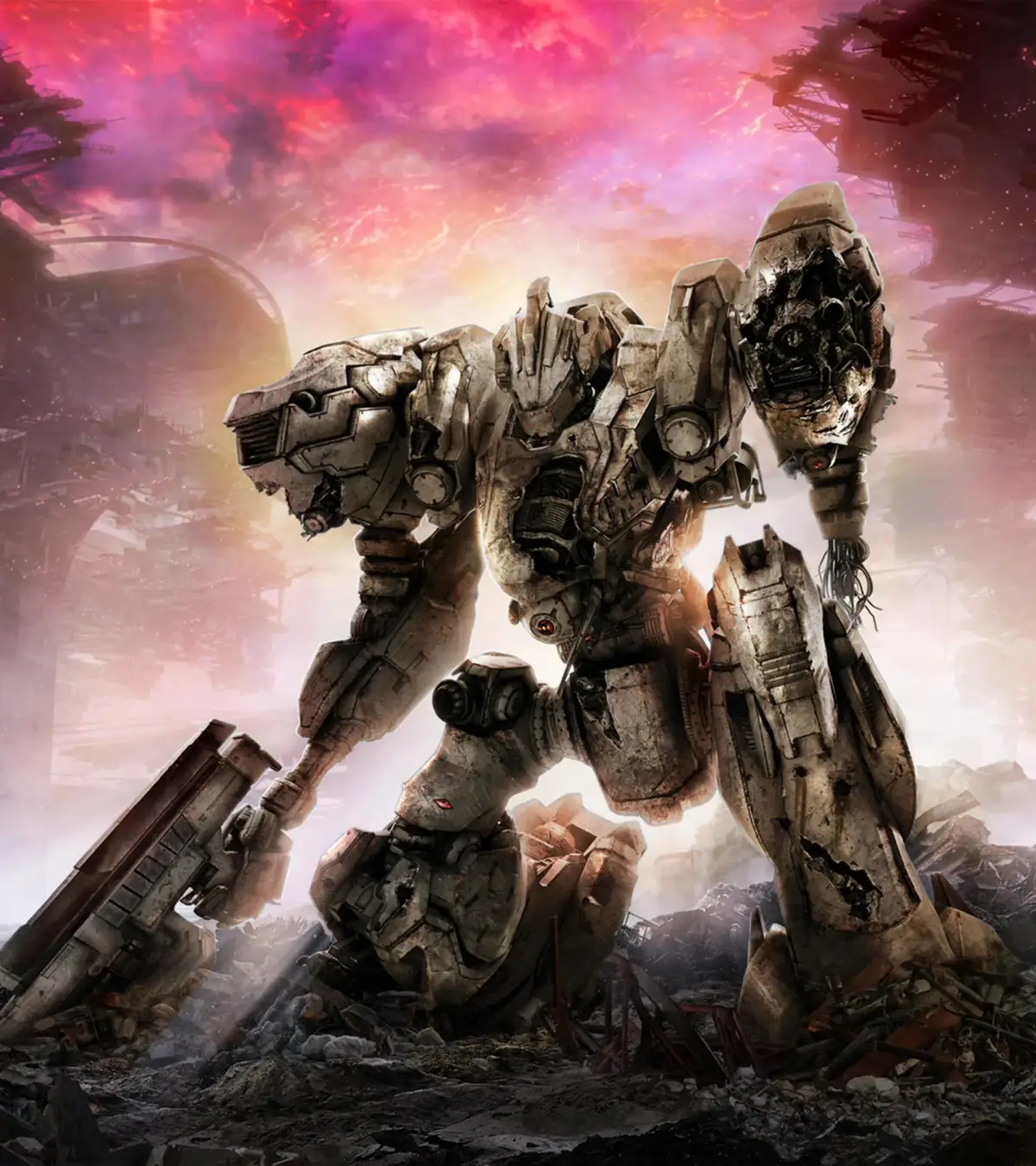
Learn how to use the Garage to assemble and customize your Armored Core, understanding the impact of each part on performance.
The Garage is the heart of your operations in Armored Core VI: Fires of Rubicon. It's where you transform a collection of parts into a formidable fighting machine, perfectly tailored to your playstyle and the challenges ahead. Mastering AC assembly is crucial for success, as even minor adjustments can dramatically alter your performance on the battlefield. This section will delve into each component, its vital statistics, and how to approach building your ultimate AC.
Understanding AC Parts: Frame Components
Your AC's frame consists of four primary components: Head, Core, Arms, and Legs. These parts define your AC's fundamental durability, defensive capabilities, and weapon handling.
- Head:
- Impact: Primarily affects your AC's system recovery, scan capabilities, and attitude stability. A higher system recovery stat means you recover from system anomalies (like being stunned) faster. Heads also contribute to your overall AP and defense.
- Key Stats: AP (Armor Points), Defense (Kinetic, Energy, Explosive), Attitude Stability, System Recovery, Scan Distance, Scan Duration, Weight, EN Load.
- Considerations: While not directly impacting combat damage, a robust head can keep you in the fight longer by mitigating status effects and improving situational awareness. Some heads offer superior scan capabilities, invaluable for exploring complex environments or locating hidden enemies.
- Core:
- Impact: The central hub of your AC, dictating overall AP, defense, and crucial EN (Energy) supply adjustments. It also influences your AC's weight capacity and determines the number of shoulder weapon slots available (typically two).
- Key Stats: AP, Defense (Kinetic, Energy, Explosive), Attitude Stability, EN Supply Adjustment, Weight Capacity, Weight, EN Load.
- Considerations: The Core is often chosen for its balance of defense and its impact on your AC's energy management and total load. A Core with high EN Supply Adjustment can significantly boost the efficiency of your Generator, allowing for more sustained energy weapon fire or boosting.
- Arms:
- Impact: Directly influences your AC's weapon stability, recoil control, and the effectiveness of melee attacks. Crucially, arms also determine the weapon slots available (typically one per arm for hand weapons) and contribute significantly to your AC's total weight capacity.
- Key Stats: AP, Defense (Kinetic, Energy, Explosive), Attitude Stability, Attack Power (Melee), Recoil Control, Firearm Specialization (Weapon Stability), Weight Capacity, Weight, EN Load.
- Considerations: High Recoil Control and Firearm Specialization are essential for accurate, sustained fire with high-recoil weapons. If you plan on a melee-focused build, prioritize Arms with strong Attack Power. Always check the weapon slots provided. Some arms are specialized for specific weapon types, offering bonuses to their performance.
- Legs:
- Impact: The most defining frame part, determining your AC's mobility, load capacity, and overall movement style. Different leg types offer distinct advantages and disadvantages, fundamentally altering how your AC navigates and engages in combat.
- Key Stats: AP, Defense (Kinetic, Energy, Explosive), Attitude Stability, Load Capacity, EN Load, Boost Speed, Quick Boost Speed, Jump Height, Weight, Kick Damage, Kick Impact.
- Types & Considerations:
- Bipedal: These are the most common and balanced leg type. They offer good all-around mobility, load capacity, and defensive stats, making them versatile for various combat scenarios. They are a solid choice for general combat and offer a good balance between speed and durability.
- Reverse Joint: Characterized by their distinctive "chicken leg" appearance, Reverse Joints excel in vertical mobility and agility. They offer superior jump height and quick boost capabilities, making them ideal for dodging attacks, navigating complex vertical environments, and maintaining aerial superiority. However, they often come with lower load capacity and can be less stable under heavy fire.
- Tetrapod: These four-legged ACs provide exceptional stability and high load capacity, allowing them to carry heavy weaponry without significant mobility penalties. Tetrapods have the unique ability to hover, providing a stable firing platform for sustained attacks, even with high-recoil weapons. Their ground speed is generally slower than bipeds or reverse joints, but their aerial maneuverability (while hovering) can be surprisingly effective. They are excellent for heavy weapon platforms and defensive roles.
- Tank: The heaviest and most durable leg type, Tank treads offer the highest load capacity and extreme attitude stability. They can fire the heaviest weapons while moving without penalty and are incredibly resistant to stagger. Their primary drawbacks are their significantly slower ground speed and limited maneuverability compared to other leg types. Tanks are perfect for brute-force builds, soaking up damage, and delivering overwhelming firepower. They often have the highest AP and defensive stats among all leg types.
Understanding AC Parts: Internal Components
Internal parts are the unseen engines of your AC, dictating its energy, propulsion, and targeting systems. These components are just as crucial as frame parts for optimizing your AC's performance.
- Generators:
- Impact: The power source of your AC. A good generator is vital for sustaining weapon fire, boosting, and quick boosting. An underpowered generator will severely limit your AC's combat endurance and mobility.
- Key Stats: EN Output (total power available to all components), EN Capacity (how much energy can be stored for bursts of activity), Supply Recovery (how quickly energy regenerates), Post-Recovery EN Supply (energy available immediately after depletion), EN Load.
- Considerations: High EN Output is crucial for energy-intensive weapons and boosters. High EN Capacity allows for longer bursts of activity (e.g., sustained boosting or firing energy weapons), while fast Supply Recovery minimizes downtime between energy-intensive actions. Balance these based on your weapon and booster choices. Overloading your EN Load will result in a critical energy deficit, severely impacting performance.
- Boosters:
- Impact: Dictate your AC's movement speed, quick boost efficiency, and assault boost capabilities. Boosters are critical for dodging, closing distances, and maintaining optimal engagement ranges.
- Key Stats: Boost Speed, Quick Boost Speed, Quick Boost EN Consumption, Assault Boost Speed, Assault Boost EN Consumption, Optimal Weight, EN Load.
- Considerations: Choose boosters that complement your leg type and desired mobility. Lighter ACs benefit from high Quick Boost Speed for agile evasion, while heavier ACs might prioritize overall Boost Speed for repositioning. Pay close attention to EN Consumption rates, as inefficient boosters can quickly drain your generator. Some boosters excel in vertical thrust, others in horizontal.
- FCS (Fire Control System):
- Impact: Your AC's targeting computer. It determines the effectiveness of your weapon lock-on, missile tracking, and overall aiming precision. A well-matched FCS can drastically improve your accuracy and damage output.
- Key Stats: Close-Range Assist (effectiveness of lock-on at close distances, typically 0-130m), Medium-Range Assist (effectiveness of lock-on at medium distances, typically 130-260m), Long-Range Assist (effectiveness of lock-on at long distances, typically 260m+), Missile Lock Correction (how quickly and accurately missiles track targets), Target Lock Distance.
- Considerations: Match your FCS to your primary weapon ranges. If you're using shotguns and melee, prioritize Close-Range Assist. If you're a sniper or using long-range rifles, Long-Range Assist is key. Missile builds absolutely require high Missile Lock Correction to ensure their projectiles hit. Some FCS units offer a balanced approach, while others specialize.
Expansion Part
The Expansion Part is a unique, single-use ability that can turn the tide of battle. While not a permanent stat boost, it's a crucial component of your AC build, chosen in the Garage. You can only equip one Expansion Part at a time.
- Impact: Provides a temporary, powerful effect such as a shield, a burst of damage, or a system override. These abilities are activated manually during combat and have a cooldown.
- Types & Considerations:
- Pulse Protection: Creates a temporary energy shield around your AC, absorbing incoming damage. Excellent for mitigating burst damage or weathering sustained fire.
- Assault Armor: Unleashes a powerful omnidirectional energy blast, dealing damage to nearby enemies and staggering them. Ideal for clearing swarms of weaker enemies or punishing aggressive opponents in close quarters.
- Terminal Armor: Upon reaching critical AP, this automatically activates a brief period of invincibility, allowing you to survive a lethal blow and potentially retaliate or escape. A lifesaver for builds that often find themselves in precarious situations.
- Pulse Armor: Similar to Pulse Protection but often with different properties or duration.
- Kinetic Armor: Provides temporary resistance to Kinetic damage.
- Energy Armor: Provides temporary resistance to Energy damage.
- Explosive Armor: Provides temporary resistance to Explosive damage.
Weapons
Your offensive capabilities are defined by your weapon loadout. You can equip up to four weapons: one in each hand and one on each shoulder. Weapons are categorized by their damage type (Kinetic, Energy, Explosive) and their intended range/role.
- Impact: Directly affects your damage output, impact on enemies (leading to stagger), range, and overall combat effectiveness.
- Key Stats: Attack Power, Impact (how much stagger damage it deals), Recoil, Fire Rate, Reload Time, Range, Weight, EN Load, Ammunition Capacity, Direct Hit Adjustment (bonus damage to staggered enemies).
- Considerations:
- Damage Types:
- Kinetic: Often ballistic weapons (rifles, machine guns, shotguns). Good all-around damage, effective against most targets.
- Energy: Lasers, plasma weapons. High damage, often with charge-up mechanics. Can be very effective against armored targets but often have higher EN consumption.
- Explosive: Missiles, grenades, bazookas. High impact and burst damage, often with area-of-effect. Excellent for staggering enemies.
- Weapon Slots:
- Right Arm / Left Arm: Typically for hand-held weapons like rifles, shotguns, melee weapons, pistols.
- Right Shoulder / Left Shoulder: Often for heavier, slower-firing weapons like missile launchers, grenade launchers, cannons, or back-mounted energy weapons. Some shoulder weapons are deployable or have unique firing modes.
- Synergy: Balance your weapon choices for different engagement ranges and enemy types. Consider pairing a high-impact weapon (like a shotgun or bazooka) to quickly stagger an enemy, followed by a high-damage weapon (like a rifle or melee attack) to capitalize on the "Direct Hit Adjustment" bonus.
- Weight & EN Load: Always monitor your AC's total weight and EN load. Heavy weapons will slow you down, and energy-hungry weapons will quickly deplete your generator if not managed properly.
- Ammunition: Pay attention to ammo capacity. Some powerful weapons have limited ammunition, requiring careful resource management during longer missions.
- Damage Types:
Experimentation & Optimization
The true depth of AC assembly lies in experimentation. There is no single "best" build; rather, there are optimal builds for specific missions, bosses, or playstyles. The Garage is your laboratory, and continuous refinement is key to mastering Armored Core VI.
- Strategic Approach to Experimentation:
- Identify a Goal: Are you struggling with a specific boss? Do you want to try a new playstyle (e.g., lightweight melee, heavy tank)? Is a particular mission proving too difficult? Clearly define what you want your AC to achieve.
- Focus on a Core Concept: Start with a key part that defines your desired playstyle. For example, if you want a highly mobile AC, begin by selecting Reverse Joint legs and a high-output booster. If you want a heavy weapon platform, start with Tank legs and a high-capacity generator. Build the rest of your AC around this central idea.
- Test in the Training Arena: Before committing to a mission, take your new build into the Training Arena. This allows you to test weapon efficacy, mobility, and energy management without penalty. Pay attention to how your AC handles, its speed, how quickly its EN depletes, and the effectiveness of your weapon combinations against various target types. Practice dodging and quick boosting.
- Analyze Mission Parameters: Before each mission, review the objective and anticipated enemy types. Is it a close-quarters brawl or a long-range engagement? Are there many airborne enemies? Are there heavily armored targets? Adjust your weapons, FCS, and even your leg type accordingly. For example, a mission with many fast, airborne enemies might call for a Reverse Joint AC with a strong Close-Range FCS and anti-air weapons.
- Observe and Adapt: If a build isn't working, don't be afraid to return to the Garage. Even small tweaks to a Generator (for better EN recovery), FCS (for improved lock-on), or a single weapon can make a significant difference. Sometimes, swapping out a single part can completely change your AC's effectiveness.
- Common Pitfalls:
- Overloading: Exceeding your AC's Load Capacity (determined by your Legs and Core) will severely penalize your mobility and potentially prevent you from deploying. Always check the "Load" stat in the Garage. An overloaded AC will move sluggishly and be an easy target.
- EN Overload: Equipping too many energy-hungry parts (weapons, boosters, even some frame parts) can quickly drain your Generator, leaving you vulnerable with no energy for boosting or firing. Monitor your "EN Load" carefully; if it exceeds your Generator's "EN Output," you will be in a constant energy deficit.
- Ignoring Attitude Stability: While not directly damage-related, low Attitude Stability means you'll be staggered more easily by enemy attacks, leading to critical openings where you are defenseless. This is especially dangerous against bosses with high impact attacks.
- Mismatched FCS: Using a long-range FCS with close-range weapons will result in poor lock-on and wasted potential, as your weapons won't track effectively at their optimal range. Conversely, a close-range FCS with long-range weapons will make it difficult to hit distant targets.
- Lack of Weapon Synergy: Relying on a single damage type or range can leave you vulnerable to specific enemy defenses or combat situations. A balanced loadout with options for different ranges and enemy types is often more effective.
- Neglecting Defense: Focusing solely on offense or mobility can leave your AC too fragile. Ensure your AP and defensive stats (Kinetic, Energy, Explosive) are adequate for the challenges you face.
The Garage is your workshop, and your AC is your masterpiece. Embrace the iterative process of building, testing, and refining to conquer the Fires of Rubicon. The most successful pilots are those who understand their machines intimately and can adapt them to any challenge.
100% Human-Written. AI Fact-Checked. Community Verified. Learn how AntMag verifies content