
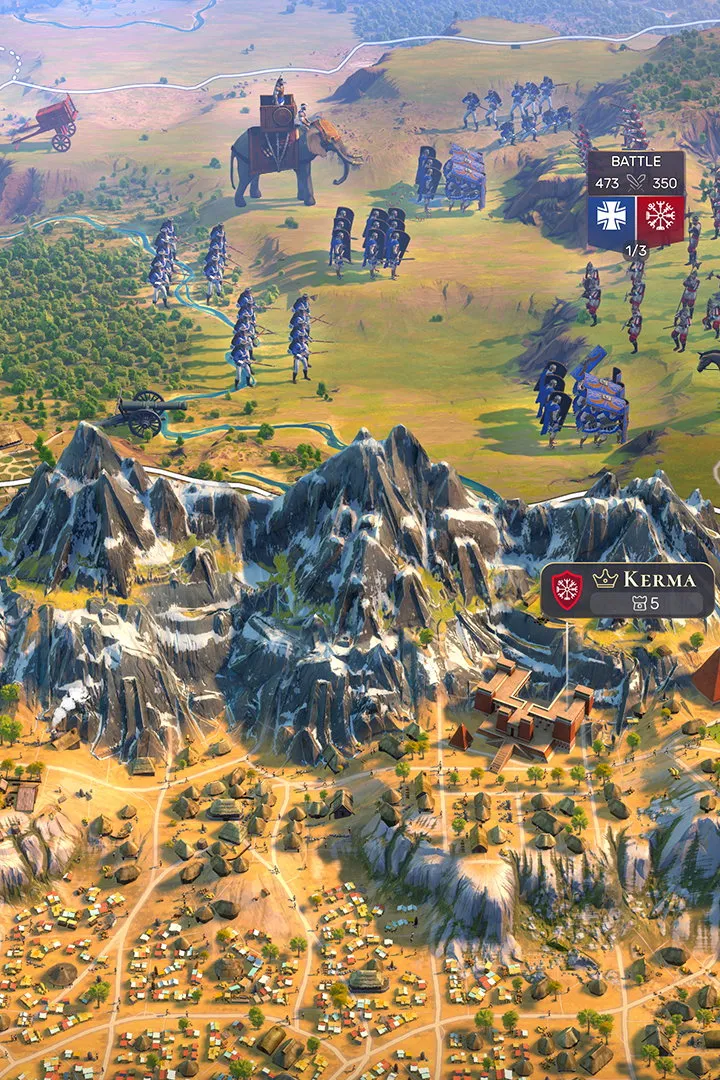
Learn effective city management in Humankind, focusing on building vital infrastructure like the Market Quarter and developing key districts.
Effective city management is the backbone of any successful civilization in Humankind, and understanding its core mechanics is crucial for sustained growth and dominance. Once your first city is established, and as you found subsequent settlements, you will need to meticulously manage their development to maximize their output and ensure stability. This involves a careful balance of population assignment, district construction, and infrastructure development. Each city has a population that can be assigned to work specific tiles or contribute to various city functions, directly impacting resource generation and stability. Districts are specialized areas within a city that provide unique bonuses and unlock new capabilities, such as increased science generation, faster production, or improved money income. Infrastructure, on the other hand, encompasses improvements like roads and specialized buildings that enhance city-wide benefits and connectivity. Mastering these interconnected systems allows you to tailor each city to specific roles, creating a powerful and efficient empire capable of overcoming any challenge the game throws at you.
The interplay between population, districts, and infrastructure is what defines a city's potential. A city with a large population but no specialized districts will struggle to produce effectively. Conversely, a city with many districts but a small population will be unable to fully utilize their bonuses. Infrastructure acts as a multiplier, enhancing the effectiveness of both population and districts. For example, roads can speed up unit movement between cities, facilitating trade and military deployment, while certain buildings might increase the output of adjacent districts. The game also introduces the concept of Stability, which is influenced by factors like population happiness, overcrowding, and the presence of certain districts or infrastructure. Maintaining high stability is vital, as low stability can lead to revolts and decreased productivity. Therefore, a holistic approach to city management, considering all these elements in conjunction, is essential for building a thriving civilization that can endure through the ages and leave a lasting mark on history.
Population Assment and Resource Yields
Your city's population is its most valuable asset, and assigning them effectively to work tiles or contribute to city functions is paramount. Each citizen can be assigned to work an adjacent tile, generating resources like food, production, or money based on the tile's yield. The game displays the yield of each tile, allowing you to make informed decisions. For instance, if your city is struggling with food, ass more citizens to work fertile tiles. If you need to build units or districts quickly, ass citizens to tiles with high production yields. Beyond tile work, citizens can also contribute to specialized districts, enhancing their output. For example, assigning population to a Campus District will significantly boost your science generation. It's a dynamic process; you'll need to constantly re-evaluate your population assignments based on your current needs and strategic priorities. Over-assigning population to one resource can starve another, so maintaining a balanced approach is often key, especially in the early to mid-game.
Districts: Specialization and Bonuses
Districts are specialized zones within your cities that provide unique bonuses and are fundamental to city development. Technologies researched will unlock the ability to build various districts, such as the Market District (money), Campus District (science), Barracks District (military units), and Harbor District (naval units and trade). Each district has specific adjacency bonuses, meaning they gain additional benefits when built next to certain other districts or terrain features. For example, a Campus District might gain a bonus when built next to hills or mountains. Strategically placing districts to maximize these bonuses is crucial for optimizing your city's output. Furthermore, districts often have slots for infrastructure buildings, which further enhance their function. Choosing which districts to build and where to place them depends on your city's role within your empire – some cities might focus on science, others on production, and some on money generation. This specialization allows for a more efficient and tailored empire.
Infrastructure: Enhancing City Capabilities
Infrastructure refers to the various buildings and improvements that enhance your city's capabilities and connectivity. This includes things like roads, which increase unit movement speed between cities and outposts, facilitating trade and troop deployment. Other infrastructure includes specialized buildings within districts, such as a Library within a Campus District to further boost science, or a Granary within a City Center to increase food storage and population capacity. The construction of infrastructure is often tied to specific technologies and requires production. Investing in the right infrastructure at the right time can significantly amplify the effectiveness of your population assignments and district bonuses. For instance, building roads early can make it much easier to respond to threats or exploit new opportunities across your empire. Carefully planning your infrastructure development based on your city's role and your empire's overall needs is a hallmark of effective city management.
Stability and City Growth
Stability is a critical mechanic that affects your city's overall performance and can even lead to revolts if it drops too low. Factors influencing stability include population happiness, overcrowding, the presence of certain districts or infrastructure, and the proximity of rival civilizations or barbarian encampments. For example, a city with a very large population but limited housing or amenities might suffer from low stability due to overcrowding. Conversely, building districts that provide positive stability bonuses, or researching technologies that improve citizen happiness, can significantly boost your city's stability. Maintaining high stability is crucial for ensuring your city functions efficiently and continues to grow. Low stability can lead to reduced production, decreased stability, and even the emergence of rebellious units. Therefore, actively managing your city's stability through careful planning of districts, infrastructure, and population assignment is as important as maximizing resource yields.
100% Human-Written. AI Fact-Checked. Community Verified. Learn how AntMag verifies content