
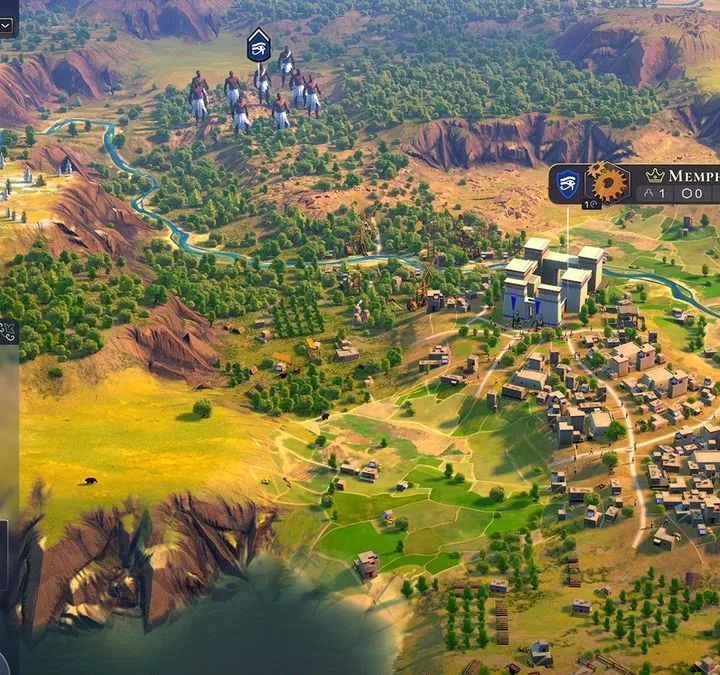
Conquer Industrialization & Pollution in Humankind by balancing factory output with environmental strain. Manage smog and resource depletion.
The rapid pace of industrialization in Humankind brings with it a significant environmental consequence: pollution. As civilizations embrace mass production, build factories, and harness new energy sources, the air and water quality of their territories can degrade, leading to several negative effects. Pollution can manifest as reduced Food yields in affected territories, decreased Stability in cities, and even negative impacts on population growth. This mechanic introduces a critical trade-off for players: the immense benefits of industrial output must be weighed against the environmental costs. oring pollution can lead to widespread discontent, reduced efficiency, and a weakened empire, even if its industrial capacity is immense. Players must actively manage and mitigate pollution through various means, such as investing in cleaner technologies or implementing specific civic policies designed to address environmental concerns. The game encourages a strategic approach to industrial development, where sustainable growth is as important as rapid expansion.
The introduction of pollution as a mechanic forces players to think beyond immediate gains and consider the long-term health of their empire and its environment. Certain technologies or buildings might have a higher pollution output than others, requiring careful selection based on strategic priorities. For instance, a player might choose to invest in less polluting, albeit potentially less efficient, industrial methods in the early stages of the Industrial Era to avoid severe environmental repercussions later on. Conversely, a player pursuing an aggressive expansionist strategy might be willing to tolerate higher levels of pollution in exchange for rapid military buildup. The game's interface will likely provide indicators for pollution levels in different territories, allowing players to monitor the situation and take corrective actions. Effectively managing pollution is not just about mitigating negative effects; it can also present opportunities. Civilizations that develop advanced pollution-control technologies or embrace sustainable practices might gain unique advantages or bonuses, further differentiating their development path. This mechanic adds a layer of complexity and strategic depth to the Industrial Era, ensuring that unchecked industrial growth comes with significant challenges.
Managing Pollution and Environmental Impact
The consequences of unchecked industrialization in Humankind manifest as pollution, a mechanic that requires careful management to maintain a healthy and stable empire. As players build factories and use advanced industrial processes, pollution levels in their territories can rise, leading to detrimental effects such as reduced Food yields, decreased city Stability, and potential negative impacts on population growth. To counter this, players must actively engage in pollution mitigation strategies. Investing in technologies that offer cleaner production methods or developing specialized infrastructure designed to reduce environmental impact are key. For example, researching technologies that unlock advanced waste management systems or renewable energy sources can help to curb pollution. Furthermore, certain civic policies might be available that specifically address environmental concerns, offering bonuses for reducing pollution or penalties for exceeding certain thresholds. regularly monitor their pollution levels, which are typically indicated within the game's interface, and prioritize addressing the most affected territories. A proactive approach to environmental management is crucial, as severe pollution can cripple an otherwise powerful industrial empire, leading to widespread discontent and a decline in overall efficiency. Balancing the drive for industrial output with the need for environmental sustainability is a core challenge of the Industrial Era.
Sustainable Industrial Development
Achieving sustainable industrial development in Humankind involves a strategic approach to balancing rapid production with environmental responsibility. While the Industrial Era offers unparalleled opportunities for growth through technologies like Steam Power and the construction of Factories, these advancements often come with a significant pollution cost. Players must actively seek out and research technologies that offer cleaner alternatives or provide methods for mitigating the negative environmental impacts of industrialization. This might include advancements in waste management, the development of more efficient energy sources, or the implementation of civic policies that incentivize or mandate environmentally friendly practices. For instance, certain districts or buildings might have a lower pollution footprint, even if their output is slightly less than their more polluting counterparts. You can also strategically choose where to locate their most polluting industries, perhaps in less populated or less agriculturally significant territories, to minimize the impact on their core population centers. The goal is to harness the power of industrialization without sacrificing the long-term health and stability of the empire. Civilizations that successfully navigate this balance may find themselves with a more resilient and prosperous future, avoiding the pitfalls of environmental collapse that can plague less judicious industrial powers.
100% Human-Written. AI Fact-Checked. Community Verified. Learn how AntMag verifies content