
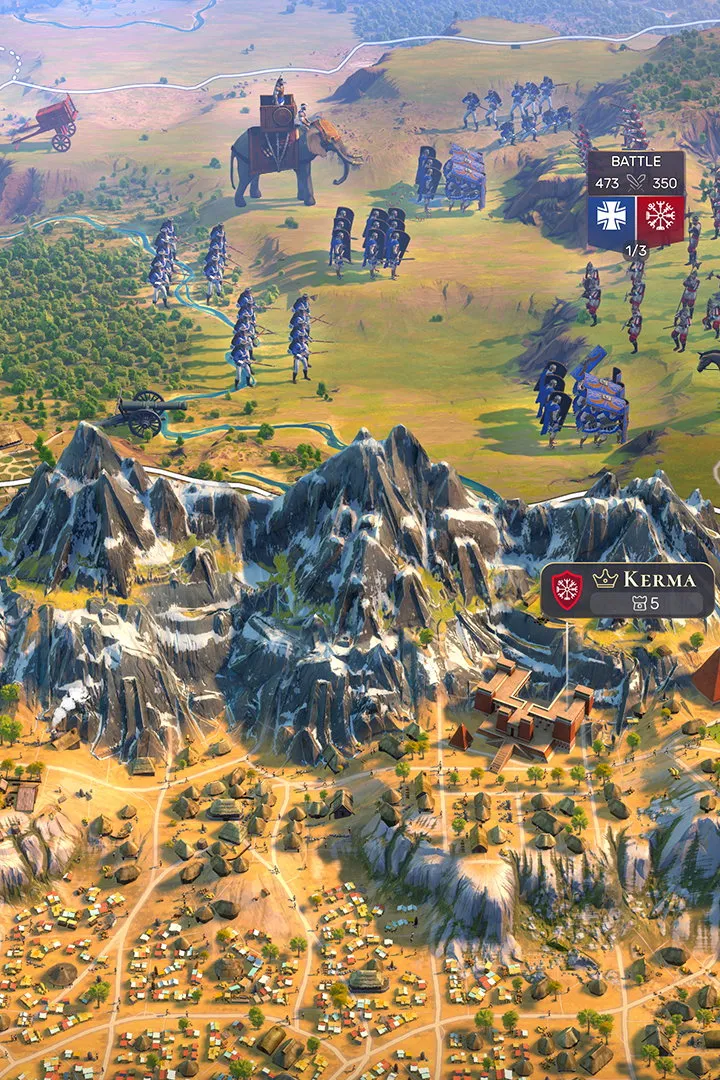
Dominate the Neolithic Era in Humankind with this food rush guide. Maximize stability and population growth for a strong start.
The very beginning of your Humankind journey, starting in the Neolithic Era, is a critical period that sets the stage for your entire civilization's development. The primary objective during these initial turns is to secure a stable and growing food supply. This is achieved by actively exploring your starting surroundings with your initial scouts and warriors to discover resource nodes, particularly those that provide food. Identifying fertile land, hunting grounds, or sources of edible plants is paramount. Your early units should be dedicated to this exploration and resource acquisition, as a hungry population is an unproductive one and can lead to significant penalties in population growth and overall stability. The game emphasizes a proactive approach to resource management from the outset, and failing to establish a strong food base early on can create a deficit that is difficult to overcome in later eras. The initial turns are a race against time to gather enough sustenance to support your burgeoning population and to prepare for the transition into the Ancient Era.
Beyond just finding food, the Neolithic Era is also about understanding your immediate environment and identifying potential locations for your first city. While the exact placement will be detailed later, the initial exploration phase should be scouting for areas rich in food, but also considering proximity to other valuable resources like wood, stone, or even potential strategic locations for future expansion. The game mechanics at this stage are relatively simple, focusing on basic movement and interaction with the environment. However, the decisions made here, such as which direction to explore or which resources to prioritize gathering, have a ripple effect. For instance, discovering a large herd of deer can provide a significant food boost, allowing your population to grow faster, which in turn enables you to field more units for further exploration or defense. The goal is to create a positive feedback loop where early success in food acquisition fuels further growth and opportunity. This initial rush for food is not just about survival; it's about laying the foundation for a prosperous civilization.
Early Exploration and Resource Gathering
Upon starting a new game, your initial units, typically a scout and a warrior, should immediately begin exploring the surrounding tiles. The primary goal is to locate food resources. Look for icons indicating fertile land, berry bushes, or animal herds like deer or boars. These provide a direct boost to your population's food intake. Your scouts are faster and have a wider vision range, making them ideal for covering large areas quickly. Warriors, while slower, are more capable of defending against any early neutral threats or hostile barbarian units that might appear. It's crucial to keep your units moving and to not linger too long in one spot unless a significant resource is found. The game encourages rapid expansion of your knowledge of the map in these early stages. Pay attention to the terrain; certain terrain types, like plains or grasslands, are generally more fertile than others, like deserts or mountains. Understanding these basic geographical advantages will help you make informed decisions about where to focus your exploration efforts. The discovery of a new resource node, especially a food-rich one, should be immediately followed by an attempt to claim it, either by establishing an outpost or by planning your first city nearby.
Securing Your First Food Sources
Once potential food sources are identified, the next step is to secure them. If you find a particularly rich food tile, such as a forest with abundant deer, consider establishing your first city in close proximity. However, before settling, it's often beneficial to establish an outpost on or adjacent to the resource. An outpost allows you to start gathering resources from that tile immediately, even before you have a fully established city. This can provide a crucial early boost to your food supply, allowing your population to grow faster. The game mechanics allow for the construction of outposts using your initial units. The cost and time to build an outpost are relatively low in the early game, making it a worthwhile investment. Remember that outposts can be upgraded later into cities, so choosing a strategic location for your first outpost that could also serve as a good city site is a wise move. The game also introduces the concept of adjacency bonuses for districts and improvements, so even in the Neolithic Era, thinking about how resources might interact with future city developments can be beneficial. Prioritizing food above all else in these initial turns is the key to a successful start.
Transitioning to the Ancient Era
The ultimate goal of the Neolithic Era rush is to accumulate enough Era Stars to transition into the Ancient Era. Era Stars are earned by completing various objectives, many of which are tied to resource gathering and population growth. For example, gathering a certain amount of food or growing your population to a specific number will award you with Era Stars. Therefore, your focus on food directly contributes to your ability to advance. Keep an eye on your Era Star progress and actively pursue objectives that al with your current strategy. If you've successfully established a strong food base, focus on objectives related to population growth or perhaps exploring a certain number of tiles. The game provides clear feedback on how you are progressing towards earning Era Stars, so it's important to check this regularly. Successfully transitioning to the Ancient Era unlocks new technologies, units, and cultures, allowing for more complex strategic decisions and opening up new avenues for expansion and development. The efficiency with which you navigate the Neolithic Era and achieve the necessary Era Stars will significantly impact your overall game trajectory.
100% Human-Written. AI Fact-Checked. Community Verified. Learn how AntMag verifies content