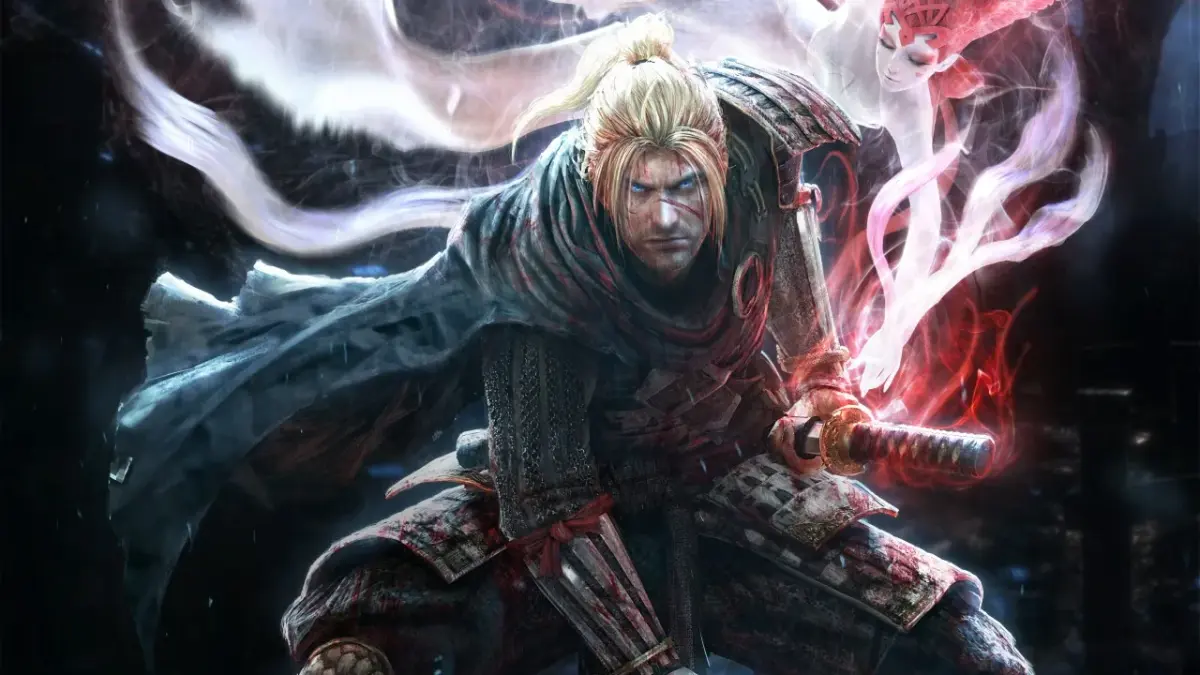
Learn about Ishida Mitsunari, Yasuke, and Oda Nobunaga in Nioh. Discover their roles, loyalties, and fates.
Ishida Mitsunari served Toyotomi Hideyoshi since Hideyoshi was under Oda Nobunaga. After Hideyoshi's conquest, Mitsunari was rewarded with the administrative rank of "Jibushoyu," often referred to as "Jibusho." Hideyoshi trusted Mitsunari, granting him the fiefdom of Sawayama in Omi province and including him among the Five Commissioners. Mitsunari often clashed with other commissioners due to his sense of justice. After Hideyoshi's death, he fiercely opposed the faction supporting Tokugawa Ieyasu, dedicating himself to the survival of the Toyotomi clan. He was known as the "Fox of Sawayama" for his plotting skills, comparable to "Ieyasu the Tanuki." Following his side's loss at the Battle of Sekigahara, Mitsunari was betrayed by Kelley. He briefly became an oni but was restored by the sacred water of Ibukiyama. Kelley used him to further plans of weaponizing Amrita, but Mitsunari remained focused on his ideal of a world where all lived by their responsibilities.
Mitsunari was raised by Hideyoshi from a young age, fostering deep loyalty. He was reportedly discovered as a temple attendant in Omi province by Hideyoshi and made into a samurai. A story tells of the young Mitsunari serving Hideyoshi three cups of tea, perfectly sized and tempered, earning Hideyoshi's trust. Mitsunari was assigned to key administrative roles in Sakai and the national land survey, fully supporting the Toyotomi administration in return.
On the first day of the tenth month, Mitsunari was executed at Rokujo-Kawara in the capital. His loyalty to the Toyotomi clan never wavered, and he was considered a model of samurai honor. Even Ieyasu acknowledged Mitsunari's understanding of true greatness in a general.
Yasuke was an imposing, black, African-born warrior who served Oda Nobunaga. He initially served a Christian missionary before entering Nobunaga's service at Nobunaga's request. Treated as a samurai, Yasuke swore fealty to Nobunaga for life. Nobunaga, having never seen a black person before, confirmed Yasuke's skin color was genuine during a bath. Yasuke received favored status, weaponry, and equipment, participating in operations like the pacification of Kai province. He was present at Honnoji Temple during Nobunaga's final stand and personally bore away his lord's remains. Later, Kelley persuaded Yasuke to assist in the resurrection of the Overlord.
Yasuke reportedly delighted Nobunaga, who disregarded tradition and popular opinion. Nobunaga allegedly planned to grant Yasuke his own castle. Yasuke, a head taller than most Japanese men and reportedly ten times as strong, helped repel Akechi's forces at Honnoji but could not prevent Nobunaga's seppuku (ritual suicide).
After breaching the guards at Honnoji, Yasuke concealed Nobunaga's remains and headed to Nijo Castle to join Nobutada, Nobunaga's son and heir. The specifics of Yasuke's actions at Nijo Castle are unclear, but Nobutada also took his own life shortly after, leaving Yasuke likely deeply disappointed.
Oda Nobunaga was a daimyo during the Warring States period who controlled central Japan, including Kyoto. He achieved the official court position of Minister of the Right, sometimes called "Ufu," but was more commonly known as the Overlord. His rule began with the conquest of Owari province. A significant victory at the Battle of Okehazama expanded his influence, allowing him to capture Kyoto and Sakai. His ambition to conquer the entire nation was thwarted when he was betrayed by his vassals and met his end at Honnoji temple. Nobunaga pioneered the use of firearms and adopted a flexible, rational approach that reshaped history and paved the way for...
- Pay attention to the historical context provided for each character to understand their motivations and allegiances within the Nioh narrative.
- Note the specific locations mentioned, such as Sawayama, Omi province, Ibukiyama, Honnoji Temple, and Nijo Castle, as they may be relevant to gameplay or lore.
- Recognize the key figures who interacted with these characters, including Toyotomi Hideyoshi, Tokugawa Ieyasu, Kelley, and Akechi.
- Understand that the descriptions highlight the characters' unique traits, such as Mitsunari's loyalty and sense of justice, Yasuke's strength and status, and Nobunaga's revolutionary tactics.
100% Human-Written. AI Fact-Checked. Community Verified. Learn how AntMag verifies content