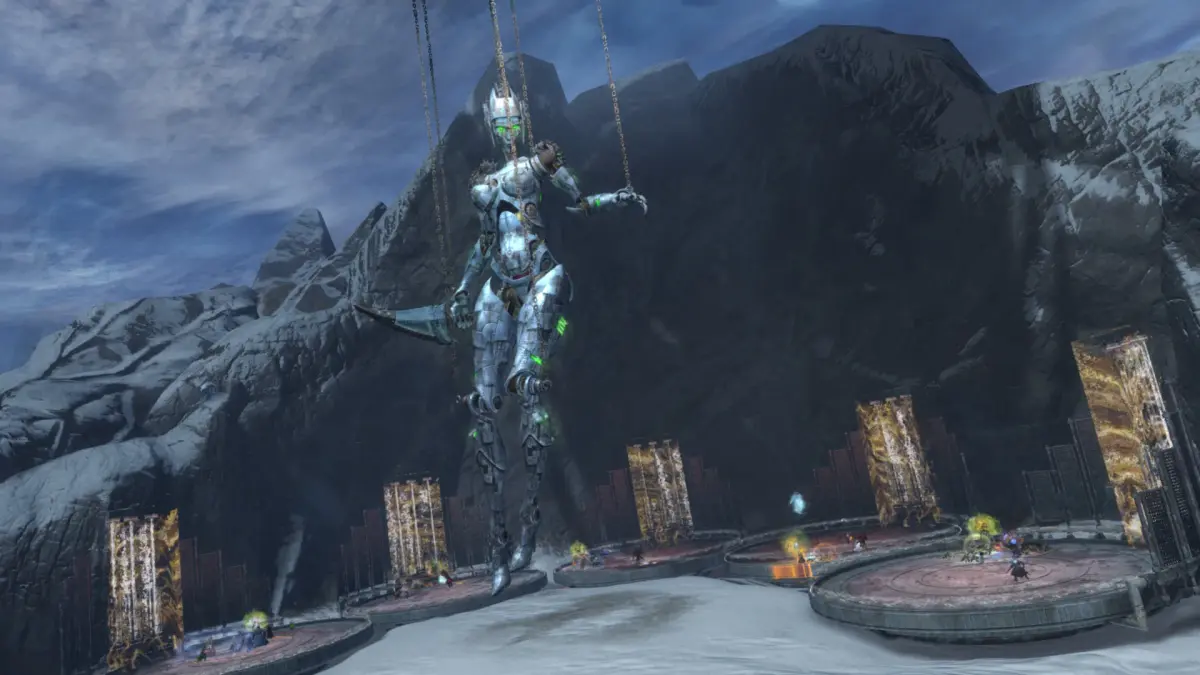
Welcome to Guild Wars 2, a sprawling RPG where you'll explore the vibrant world of Tyria. Engage in dynamic world events that unfold in real-time, master a fluid combat system, and team up with friends in online co-op adventures. Whether you're delving into story-rich quests or simply enjoying the atmospheric world, there's always something happening.
This guide dives deep into Guild Wars 2, offering strategies for crucial early gameplay, mastering combat, and tackling epic world encounters. We'll cover essential gear acquisition, advanced combat techniques, and how to conquer the game's many challenges, ensuring you're ready for anything Tyria throws at you.
Part 1
Master Guild Wars 2 basics! Learn movement (WASD, strafing), targeting (Tab, C, V), calling targets, and understand experience, levels, and attribute points.
- 1Movement: Use WASD or arrow keys for directional movement. Q and E allow strafing left and right, crucial for dodging projectiles. Always be strafing during combat if possible.
- 2Targeting: The space bar acts as left-click for attacking or interacting. Tab, [, and ] cycle through targets. C targets the closest enemy, F targets yourself, and V targets nearby NPCs. T targets a called target.
- 3Calling Targets: Hold Control while attacking an enemy to call it as a target for your party. This is typically used for healers first. It's best to have only one designated caller per party to avoid confusion.
- 4Communication: Use Control + clicking on interface elements to communicate status like low health, low energy, or conditions to your party.
- 5Leveling System: Characters start at level 1 with 100 health. Each level increases maximum health by 20 and grants attribute points to boost skills. The maximum level is 20.
Experience and Levels:
- Level 01: 0 XP
- Level 02: 2000 XP - 5 Attribute Points, 1 Skill Point
- Level 03: 4600 XP - 5 Attribute Points, 1 Skill Point
- Level 04: 7800 XP - 5 Attribute Points, 1 Skill Point
- Level 05: 11600 XP - 5 Attribute Points, 1 Skill Point
- Level 06: 16000 XP - 5 Attribute Points, 1 Skill Point
- Level 07: 21000 XP - 5 Attribute Points, 1 Skill Point
- Level 08: 27600 XP - 5 Attribute Points, 1 Skill Point
- Level 09: 32800 XP - 5 Attribute Points, 1 Skill Point
- Level 10: 39600 XP - 5 Attribute Points, 1 Skill Point
- Level 11: 47000 XP - 10 Attribute Points, 1 Skill Point
- Level 12: 55000 XP - 10 Attribute Points, 1 Skill Point
- Practice strafing early against low-damage enemies to master dodging.
- Assign only one party member as the primary target caller.
- Use Control-clicking for efficient party communication.
Part 2
Learn how attribute and skill points work in Guild Wars 2, including progression from level 13 to 20 and beyond.
- 1Level 13 grants 10 attribute points and 1 skill point.
- 2Level 14 grants 10 attribute points and 1 skill point.
- 3Level 15 grants 10 attribute points and 1 skill point.
- 4Level 16 grants 15 attribute points and 1 skill point.
- 5Level 17 grants 15 attribute points and 1 skill point.
- 6Level 18 grants 15 attribute points and 1 skill point.
- 7Level 19 grants 15 attribute points and 1 skill point.
- 8Level 20 grants 15 attribute points and 1 skill point.
- 9You continue to gain experience beyond level 20, but your character level remains at 20.
- 10After level 20, you no longer receive attribute points but still gain a skill point for every 20000 experience earned.
- 11There are two quests that each award 15 attribute points, totaling 30 attribute points from quests.
- 12In total, you can acquire 200 attribute points.
- 13Attribute points needed to increase attribute levels become steeper as the attribute level increases.
- 14It is recommended to focus on three attributes, with common distributions being 11-11-8 or 11-10-10.
- 15Using two attributes is easier, with 12-12 being a common spread.
- 16Using four or more attributes, such as 9-9-9-9, is a very poor option and will make your character weak.
- 17You can refund attribute points using refund points, earned at a rate of 1 refund point for every 250 experience.
- 18There is a maximum of 24 refund points available at one time.
- 19Skills can be accessed by pressing K by default and eight skills can be active at a time, corresponding to keys 1-8.
- 20Skills can only be changed while in towns.
- 21Most skills require energy to use, while some require adrenaline, and others require nothing.
- 22Energy is a stat that does not increase with level and can only be boosted with items.
- 23Elementalist, Necromancer, Mesmer, and Monk professions start with 30 energy and 4 arrows of energy regeneration (each arrow is 0.33 energy per second).
- 24Ranger professions start with 25 energy and 3 arrows of energy regeneration.
- 25Warrior professions start with 20 energy and 2 arrows of energy regeneration.
- 26Extra arrows of energy regeneration on non-warrior classes come from their armor.
- 27Maximum energy can be increased or decreased by certain armors.
- 28Adrenaline is gained by hitting an enemy and is used by many warrior skills.
- 29There are three basic types of long-term spells: enchantments (friendly, lasting duration), hexes (harmful, usually from enemies), and conditions (harmful effects).
- 30Health degenerating conditions include Bleeding (3 arrows, long duration), Burning (7 arrows, shorter duration, more painful than bleeding), Diseased (4 arrows, medium duration, spreads to nearby creatures of the same type), and Poison (4 arrows, long duration, can be less potent in swamp areas like Swamp Water).
- 31Non-health degenerating conditions include Blind (90% physical attack miss rate, increased stray ranged shots), Crippled (greatly reduced movement speed), Dazed (spell interruption from physical damage, 100% increased casting time), Deep Wound (20% maximum health reduction, 20% reduction in life gain other than regeneration), Exhaustion (greatly reduces energy regeneration when energy is depleted, caused by high-powered skills), and Weakness (66.6% base damage reduction before enemy armor is factored in).
- 32Armor consists of five pieces: Head, Chest,
- Experiment with different attribute point distributions, but remember the steep cost of higher attribute levels.
- If you dislike your attribute point spread, utilize refund points earned through experience.
- Be mindful of the limited number of active skills (eight) and choose them wisely.
- Energy regeneration is crucial for many professions and can be influenced by armor.
- Adrenaline is a key resource for Warriors, gained through combat.
- Understand the various conditions and their effects to better manage combat and prepare for enemy debuffs.
Part 3
Learn how armor protects different body parts in Guild Wars 2, understand armor levels (AL) and their impact on damage, and master essential game terminology for a smoother playthrough.
Hey there! So, we've covered the basics, and now it's time to get into some of the nitty-gritty details that'll make you a much tougher adventurer in Guild Wars 2. This section is all about understanding how your armor works, how much punishment you can take, and getting familiar with some of the lingo you'll hear around the game. Think of it like learning the best way to gear up and speak the language!
Armor Basics: What Gets Hit and How Much?
First off, your armor isn't just a single piece; it covers specific parts of your body: your hands, legs, and feet. You can also equip a shield, which adds its protection to all those areas. The key thing to remember is that armor ONLY protects the part of the body it logically covers. So, you'll want to make sure you're always fully armored up to minimize the damage you take. Some areas are just naturally hit more often than others, and some attacks are more likely to hit specific spots.
- Head: This area takes about 12.5% of all physical attacks. Fun fact: if an enemy is higher up than you, they have an easier time landing a headshot, which can be a critical hit! Headgear often doesn't have the same special armor bonuses as other pieces, so you might take more damage here.
- Chest: This is your biggest target, taking a whopping 37.5% of all physical attacks. It also takes the brunt of direct damage spells – those nasty ones that hit instantly without a projectile animation, like Inferno or Deathly Swarm.
- Hands: These take about 12.5% of physical attacks.
- Legs: A bit more vulnerable than your chest, legs take 25% of physical attacks.
- Feet: Similar to your hands, feet take about 12.5% of physical attacks.
Understanding Armor Level (AL) and Damage Reduction
Beyond just *where* you get hit, the amount of protection your armor offers is crucial. This is measured by your Armor Level (AL). At AL 60, you're taking the 'real' damage of an attack. Anything less than AL 60 means you'll take more damage, and anything more means you'll take less. This can make a HUGE difference!
Here's a look at how your AL affects the damage you take, shown as a percentage of that 'real' damage:
| AL | Damage % |
| 0 | 283% |
| 5 | 260% |
| 20 | 200% |
| 30 | 168% |
| 40 | 141% |
| 50 | 119% |
| 60 | 100% |
| 70 | 84% |
| 75 | 77% |
| 80 | 71% |
| 85 | 64% |
| 100 | 50% |
| 110 | 42% |
| 120 | 35% |
As you can see, even a difference of ten AL can significantly reduce the damage you receive. Keep in mind that different professions have different armor caps:
- Monk, Mesmer, and Elementalist armor cap out at 60 AL.
- Necromancers cap at 70 AL.
- Rangers cap at 75 AL (though sometimes it feels like 70!).
- Warriors have the highest cap at 85 AL.
Plus, shields can add up to 16 defense. So, without using any skills, you can reach a maximum defense of 101 AL. With skills, you can push that number way past 200, though it's a bit unclear if there's a point where defense stops giving you any extra benefit.
Essential Guild Wars 2 Terminology
You'll hear a lot of terms thrown around in Guild Wars 2, especially when you start grouping up. Knowing these will help you understand what's going on much faster:
- Aggro: This refers to the 'aggravation range' – that smaller circle on your compass. If enemies enter it, they'll usually attack you.
- AL: Armor Level, as we just discussed.
- AoE: Area of Effect. Usually refers to skills that hit a large area, common for Elementalists.
- Body Blocking: Literally standing in front of an enemy to prevent them from reaching someone else, often to draw their aggro.
- DoT: Damage over Time. Skills that tick away at an enemy's health, often used by Mesmers and Necromancers (like Conjure Phantasm).
- Ecto: Short for Glob of Ectoplasm, a crafting material.
- Farm: Repeatedly killing the same monsters to gather items, money, or experience.
- FoW: Fissure of Woe, an area accessed from the Balthazar Statue in the Temple of the Ages.
- HoH: Hall of Heroes, a place you reach after winning consecutive battles in the Tomb of Primeval Kings. Winning here can get you a Celestial Sigil.
- LFG/LFP: Looking for Group / Looking for Party. You'll see these a lot when people are trying to form a team.
- Nerf: When a game update makes a skill or build less powerful.
- Nuker: A player who can deal a massive amount of damage, often to multiple targets. Usually an Elementalist, but others can do it too.
- PUG: Pick Up Group. A group formed from random players. It's often advised to avoid these if possible, as they can sometimes be chaotic.
- PvE: Player vs Environment/Enemy. This covers all the cooperative areas of the game.
- PvP: Player vs Player.
- Runner: Someone who helps other players travel between towns, often for a fee.
- Shard: Refers to an Obsidian Shard, another crafting material.
- Shutdown: A player (usually a Mesmer or Necromancer) who specializes in stopping enemies from casting their spells.
- Sigil: Specifically, a Celestial Sigil, needed to buy a guild hall.
- Spike[r]: A player focused on dealing huge, rapid damage to a single target, hoping to overwhelm their healing.
- Tank: A player who absorbs a lot of damage, typically a Warrior or sometimes a Ranger.
- ToA: Temple of the Ages. A key location for accessing special areas like the Underworld.
- UW: Underworld, an area accessed from the Grenth Statue in the Temple of the Ages.
- WTB/WTS/WTT: Want to buy / Want to sell / Want to trade. Standard trading abbreviations.
- Zone: When a player enters a new area, which pulls the whole party along. Often used as a warning to grab items before moving on.
Understanding these terms and how armor works will give you a solid foundation as you continue your journey in Guild Wars 2. Keep this info handy, and you'll be navigating the game like a pro in no time!
Part 4
A comprehensive list of quests and missions for Guild Wars 2's Part 4, covering Pre-Searing Ascalon, Ruins of Ascalon, Northern Shiverpeaks, Beacon's Perch, and Kryta.
This guide section lists quests and missions for Guild Wars 2, organized by region. The author notes that quest rewards are not listed as they are often minor and subject to change with game patches. Maps for most missions are available separately on GameFAQs to aid navigation.
Pre-Searing Ascalon
- Normal Quests: Message From a Friend [ps1], War Preparations [ps2], [Your Class Here] Test [ps3], Gwen's Flute [ps4], Further Adventures [ps5], Unsettling Rumors [ps6], Adventure with an Ally [ps7], Second Profession [ps8], Bandit Raid [ps9], The Poisonous Devourer [ps10], Charr in the Catacombs [ps11], Charr at the Gate [ps12], The Wayward Wizard [ps13], Poor Tenet [ps14], Trouble in the Woods [ps15], A New [Your Class] Skill Trainer [ps16], A Gift for Althea [ps17], Rites of Remembrance [ps18], Little Thom's Big Cloak [ps19], The Hunter's Horn [ps20], The Worm Problem [ps21], Tithe for Ashford Abbey [ps22], Opposition to the King [ps23], The True King [ps24], The Orchard [ps25], The Prize Moa Bird [ps26], The Egg Hunter [ps27], The Rogue's Replacement [ps28], Across the Wall [ps29], Path To Glory [ps30], Ascalon Academy (Mission) [ps31]
- Profession Sampler Quests: Grawl Invasion [psst1], A Mesmer's Burden [psst2], The Ranger's Companion [psst3], Elementalist Experiment [psst4], A Monk's Mission [psst5], The Necromancer's Novice [psst6]
- Primary and Secondary Professions Skill Trainer Quests: Supremacy of Air [psps1] (Elementalist Only), Domination Magic [psps2] (Mesmer Only), Blessings of Balthazar [psps3] (Monk Only), Protection Prayers [psps4] (Monk Only), The Accursed Path [psps5] (Necromancer Only), Power of Blood [psps6] (Necromancer Only), Test of Marksmanship [psps7] (Ranger Only), Unnatural Growth [psps8] (Ranger Only), Warrior's Challenge [psps9] (Warrior Only), The Vineyard Problem [psps10] (Warrior Only)
- Quests which are not really quests: The Bear Hunters [psq1], Farmer Dirk's Prize Winning Hogs [psq2], Dress up Gwen! [psq3]
Ruins of Ascalon
- Missions: The Great Northern Wall [mis1], Fort Ranik [mis2], Ruins of Surmia [mis3], Nolani Academy [mis4]
- Ascalon City: The Krytan Ambassador [roa1], The King's Message [roa2], Helping the People of Ascalon [roa3], The Ambassador's Quandary [roa4], Rastin's Ritual [roa5], Defend the Wall [roa6], Cities of Ascalon [roa7], Counting the Fallen [roa8], Scavengers in Old Ascalon [roa9], Vanguard Equipment [roa10], Barradin's Advance [roa11], A Mission of Peace [roa12], The Troublesome Artifact [roa13], Fires in the East [roa14], Symon's History of Ascalon [roa15], Scorched Earth [roa16] (Elementalist Only), Elemental Knowledge [roa17] (Elementalist Only), Recruits for Hollis [roa18], Gargoyle Trouble [roa19] (Warrior Only), Military Matters [roa20] (Warrior Only), To the Breach [roa21] (Warrior Only), Endangered Species [roa22] (Ranger Only), The Charr Patrol [roa23] (Ranger Only), The Charr Staging Area [roa24] (Ranger Only)
- Sardelac Sanitarium: Supplies for the Duke [ros1], Barradin's Stand [ros2], Sowing Seeds [ros3] (Monk only), Protecting Ascalon [ros4] (Monk only), In Memory of Paulus [ros5] (Monk only), Mesmerizing the Enemy [ros6] (Mesmer only), Trying Times [ros7] (Mesmer only), A Cure for Ralena [ros8] (Mesmer only), The Stolen Artifact [ros9] (Necromancer Only), Death in the Ruins [ros10] (Necromancer Only), Oberan's Rage [ros11] (Necromancer Only), Shalev's Task [ros12] (Elementalist Only), Family Ties [ros13]
- Piken Square: The Siege of Piken Square [rop1], Casualty Report [rop2], The Duke's Daughter [rop3], Fires in the North [rop4], Red-Cloaked Deserter [rop5], Hammer and Anvil [rop6], Garfazz Bloodfang [rop7], Althea's Ashes [rop8], Fallen Soldiers [rop9] (Necromancer Only), Army Life [rop10] (Warrior Only), Charr Reinforcements [rop11] (Ranger Only)
- Fort Ranik / Frontier Gate / Serenity Temple: The Regent Valley Defense [rof1], Deliver a Message to my Wife [rof2], Frontier Gate Fugitives [rof3], Ruins of Surmia [rof4], Replacement Healers [rof5] (Monk only), Unnatural Creatures [rof6] (Mesmer only), Experimental Elixir [rof7] (Mesmer only), The Way of the Geomancer [rof8] (Elementalist Only), The Geomancer's Test [rof9] (Elementalist Only), Caravan in Trouble [rof10]
Northern Shiverpeaks
- Missions: Borlis Pass [mis5], Frost Gate [mis6]
- Yak's Bend: The Way is Blocked [nspy1], The Road to Borlis Pass [nspy2], The Shiverpeak Stragglers [nspy3], The Missing Artisan [nspy4], Helping the Dwarfs [nspy5], Oswalt's Epitaph [nspy6], Minaar's Trouble [nspy7], Minaar's Worry [nspy8], Iron Horse War Machine [nspy9], The Wayward Monk [nspy10] (Monk Only), The Stone Summit Champion [nspy11] (Mesmer Only), Renegade Necromancer [nspy12] (Necromancer Only), A Heart of Ice [nspy13] (Elementalist Only), Securing the Vale [nspy14] (Warrior Only), Stone Summit Beastmasters [nspy15] (Ranger Only)
Beacon's Perch
- Hungry Devourer [nspb1], The Deserters [nspb2], To Kryta: Refugees [nspb3], To Kryta: The Ice Cave [nsbp4], To Kryta: Journey's End [nsbp5]
Kryta
- Missions: Gates of Kryta [mis7], D'Alessio Seaboard [mis8], Divinity Coast [mis9]
- Lion's Arch/North Kryta Province Quests: Report to the White Mantle [kla1], The Villainy of Galrath [kla2], Orrian Excavation [kla3], Merchant's Plea [kla4], The Weaver of Nebo [kla5], Duties of a Lionguard [kla6], The Ascalon Settlement [kla7]
Similar guides you might like




100% Human-Written. AI Fact-Checked. Community Verified. Learn how AntMag verifies content