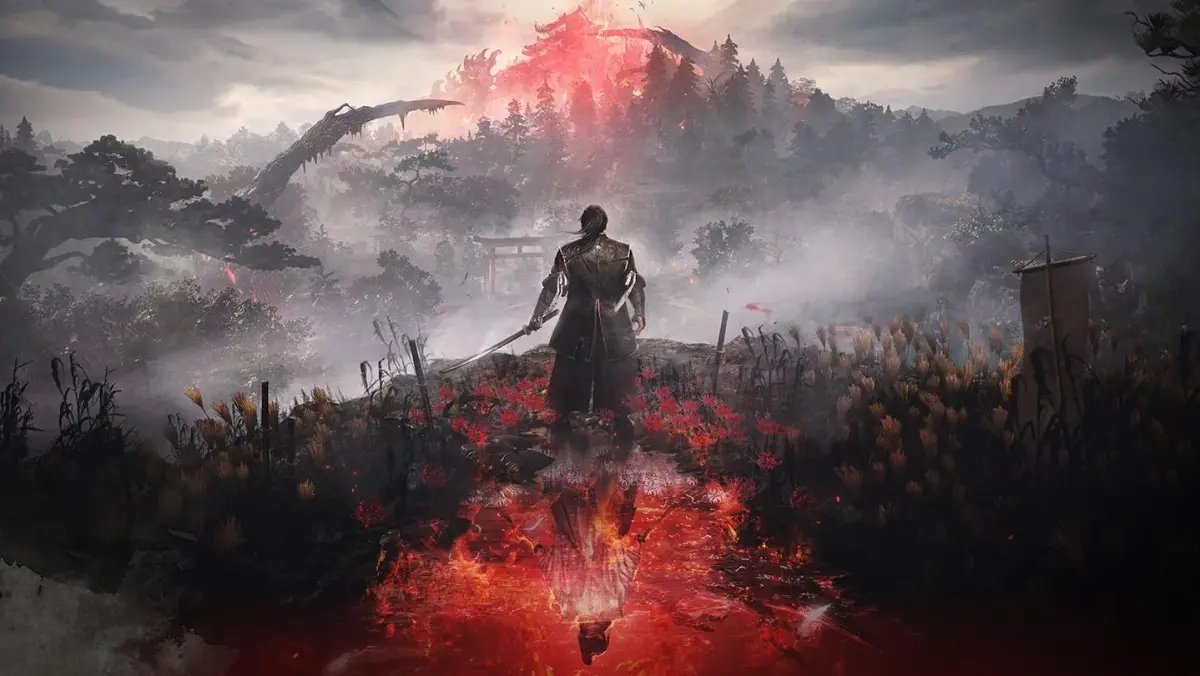
Learn about Ishida Mitsunari, the Obsidian Samurai (Yasuke), and Oda Nobunaga in Nioh 3. Details on their roles and histories.
Ishida Mitsunari
Ishida Mitsunari was a general under the Toyotomi clan, serving Toyotomi Hideyoshi since Hideyoshi was under Oda Nobunaga. He was rewarded with the administrative rank of "Jibushoyu" (often called "Jibusho") after Hideyoshi's conquest. Hideyoshi trusted Mitsunari, believing him not driven by self-interest, and granted him the fiefdom of Sawayama in Omi province. Mitsunari was one of the Five Commissioners who held power under Hideyoshi but often argued with them due to his sense of justice. After Hideyoshi's death, he clashed with those who supported Tokugawa Ieyasu, dedicating himself to the survival of the Toyotomi clan. He was a skilled plotter, sometimes called the "Fox of Sawayama." After his side lost the Battle of Sekigahara, Mitsunari was betrayed by Kelley. He briefly became an oni but was restored to sanity by purification with the sacred water of Ibukiyama. He was used by Kelley to weaponize Amrita but maintained his ideal of a world where all lived according to their responsibilities. Mitsunari was raised by Hideyoshi from a young age and was unusually loyal. He was said to have been a temple attendant in Omi province before Hideyoshi discovered him and made him a samurai. A story about this time involves Mitsunari serving Hideyoshi three cups of tea, each perfectly suited to the moment. Hideyoshi trusted Mitsunari, assigning him important administrative roles in Sakai and the national land survey. Mitsunari returned this trust with full support for the Toyotomi administration. On the first day of the tenth month, Mitsunari was executed at Rokujo-Kawara in the capital. His loyalty to the Toyotomi clan never wavered, and he remained a model of samurai honor. Even Ieyasu praised Mitsunari as one who understood true greatness in a general.
Obsidian Samurai (Yasuke)
Yasuke was a warrior under Oda Nobunaga. He was a black, African-born man of imposing build who first came to Nobunaga's attention as the servant of a Christian missionary. He left that position and entered Nobunaga's service at Nobunaga's request. Yasuke was treated as a samurai and swore fealty to Nobunaga for life. Nobunaga, having never seen a black person before, believed Yasuke's skin color was genuine only after seeing him undress and bathe. Yasuke was favored with status, weaponry, and equipment, participating in operations like the pacification of Kai province. He was by Nobunaga's side at his final stand at Honnoji Temple and, on his own initiative, bore away his lord's remains after Nobunaga's death. Later, he was persuaded by Kelley to assist in the resurrection of the Overlord. Yasuke reportedly delighted Nobunaga, who did not care much for tradition or popular opinion. Nobunaga reportedly planned to grant Yasuke his own castle. Yasuke was a full head taller than other Japanese men and said to be ten times as strong. At the Battle of Honnoji, Yasuke's strength helped drive back Akechi's forces, but he could not prevent Nobunaga's seppuku (ritual suicide). After breaking through the guards around Honnoji, Yasuke concealed Nobunaga's remains and set out for Nijo Castle to join forces with Nobutada, Nobunaga's son and heir. It is unclear what Yasuke did at Nijo Castle, but Nobutada also took his own life, leaving Yasuke bitterly disappointed.
Oda Nobunaga
Oda Nobunaga was a daimyo during the Warring States period who dominated central Japan, including the capital, Kyoto. He rose to the official position of Minister of the Right in the court hierarchy, sometimes known as "Ufu," but was more commonly called the Overlord. His rule began with the conquest of Owari province. A victory at the Battle of Okehazama expanded his influence, allowing him to take Kyoto and Sakai. Conquest of the entire nation seemed within his grasp, but he was betrayed by his own vassals and met his end at Honnoji temple. His revolutionary tactics included the use of firearms, and his flexible, rational approach changed history by paving the way for further developments.
- Pay attention to the historical context of each character to understand their motivations and allegiances within Nioh 3.
- The "three cups of tea" story highlights Mitsunari's early loyalty and service to Hideyoshi.
- Yasuke's strength and loyalty are emphasized, particularly his actions at Honnoji Temple.
- Oda Nobunaga's innovative tactics, such as the use of firearms, were crucial to his rise to power.
100% Human-Written. AI Fact-Checked. Community Verified. Learn how AntMag verifies content