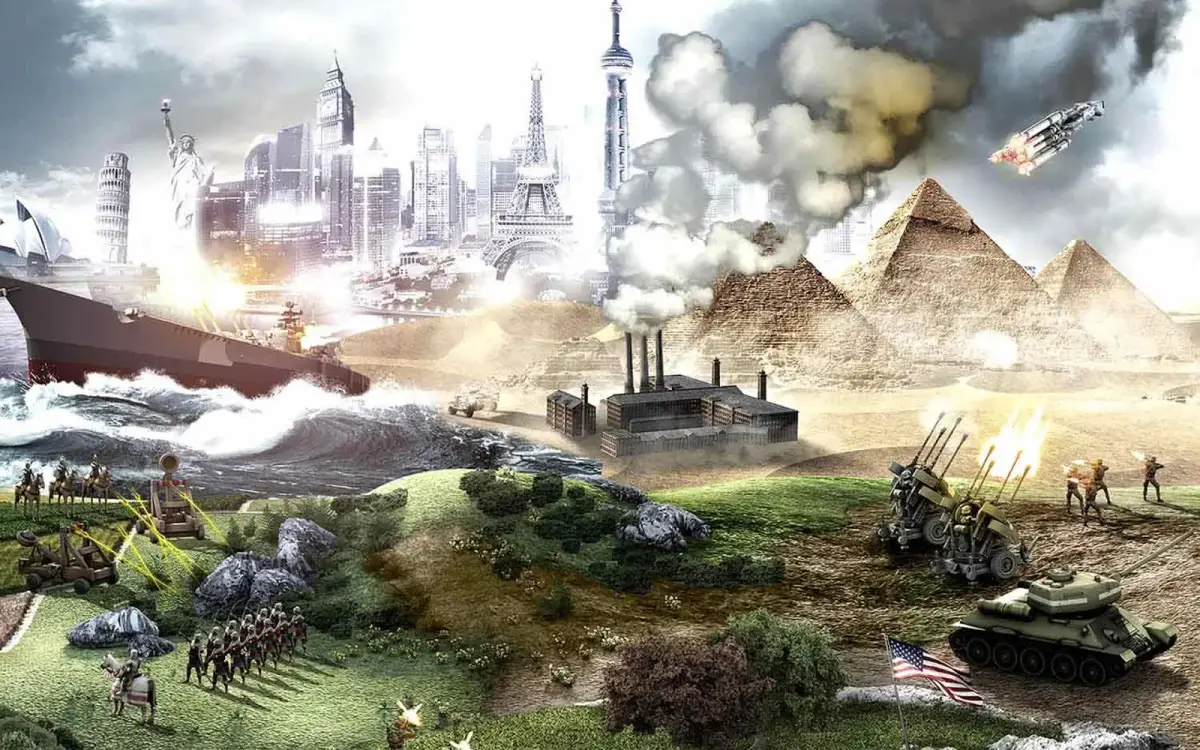
Civilization V is a turn-based strategy game where you guide a civilization from its humble beginnings in antiquity all the way to the space age. You'll manage resources, develop cities, research powerful technologies, and engage in diplomacy or military conquest with rival civilizations. It’s a deep, rewarding experience for anyone who enjoys building an empire and shaping history.
This guide will help you master the intricacies of Civilization V. We'll cover everything from efficient city development and resource management to advanced diplomatic strategies and military tactics. Whether you're aiming for a scientific victory, a cultural dominance, or a military conquest, this guide provides the knowledge to achieve victory through any means necessary, ensuring you can navigate diverse eras and overcome aggressive rivals.
Part 2
Dive into Civilization V's Social Policies! Learn about Tradition, Liberty, Honor, and more to shape your empire's growth and dominate your rivals.
Alright, welcome back! We're diving into Part 2 of our Civilization V guide, and this time we're focusing on something super important that'll really shape how your empire grows: Social Policies. Think of these as the guiding principles your civilization follows, unlocking new bonuses and abilities.
The game breaks down Social Policies into different trees, and choosing the right ones at the right time can make a huge difference. We'll cover the main ones you'll encounter:
- [9.02] Tradition: Great for focusing on a strong, single capital.
- [9.03] Liberty: If you're planning to found a lot of cities, this is your go-to.
- [9.04] Honor: Perfect for a more aggressive, militaristic playstyle.
- [9.05] Piety: Good for boosting faith and religious benefits.
- [9.06] Patronage: Excellent for managing and benefiting from City-States.
- [9.07] Commerce: Focuses on boosting your economy and trade.
- [9.08] Rationalism: The go-to for science-focused empires, especially in the later game.
- [9.09] Freedom: A powerful late-game policy tree for broad bonuses.
- [9.10] Order: Offers strong bonuses for production and military units.
- [9.11] Autocracy: Another option for a more militaristic or oppressive approach.
We'll also touch on some other sections you might see in a full guide, like contact information and credits, but the real meat here is understanding how these policies can steer your civilization towards victory!
Part 3
Explore the major changes in Civilization V, including unique units/buildings, the removal of religion, revamped civics, tech trading, and the end of unit stacking. Learn about Wealth, Culture, Happiness, and Great People.
This section details key changes and mechanics introduced in Civilization V, focusing on unique civilization features, the removal of religion, the overhaul of civics, alterations to technology trading, the elimination of unit stacking, and the core concepts of Wealth, Culture, Happiness, and Great People.
Unique Civilization Features: Civilizations now feature unique elements, such as one unique building and one unique unit, or two unique units. For example, the Americans have the Minuteman and B17, while the Chinese have the Chu-No-Ku unit and the Paper Maker building.
Religion: The religion system from Civilization IV has been removed due to ineffective implementation.
Civics: Civics have been completely redone. Players now choose social policies accumulated through culture points, rather than government systems.
Technology: While the tech tree remains, tech trading has changed. It now involves research pacts and joint ventures, costing money, instead of direct trading.
Stacks: Unit stacking is no longer possible. A single hex tile can only hold one civilian unit and one military unit.
Wealth, Culture and Happiness
These three elements are crucial for managing your empire:
Happiness
Happiness is now a global metric, affecting empire growth and imposing combat penalties on armies if the empire is unhappy. Factors increasing unhappiness include population, the number of cities, and annexed cities. Happiness can be improved through Wonders, buildings, luxury resources, and natural wonders.
Culture
Culture serves two primary purposes: expanding city borders and acquiring new social policies. Culture is generated by the starting city's palace, culture-producing buildings, Wonders, social policies, specialists, Great Artists (via Landmarks), and partnered city-states. Culture points are tallied and spent on social policies.
Wealth
Wealth, or gold, is generated from cities, Great Merchants, trade routes, conquering enemies, and city-states. Gold is spent on city maintenance (buildings, roads/railroads), military unit upkeep, buying tiles, buildings, and unit upgrades. Trade routes can be established between connected cities, with coastal cities with harbors forming instant trade routes with other coastal cities under the same control if connected to the capital.
Great People
Great People are influential figures in various fields. There are five types: Great Artists (e.g., Mozart, Beethoven, Shakespeare), Great Generals (e.g., Robert E. Lee, Lord Nelson, Rommel), and Great Engineers (who influence the world with their buildings).
Part 4
Learn how to generate and use Great People like Artists, Engineers, Merchants, and Scientists to foster Golden Ages in Civilization V.
- 1Generate Great Person points in cities using specialists (engineers, artists, merchants, scientists). Each specialist type generates points for their respective profession.
- 2Boost Great Person point generation with Wonders like the Hagia Sophia, which provides a 33% increase.
- 3Gain Great General points through combat; points are directly related to experience (EXP) points from defeating units.
- 4Use a Great Person to foster a Golden Age, a period of increased knowledge with benefits like +1 coin per tile generating gold and +1 hammer per tile generating production.
- 5Note: As of the latest patch, a Golden Age results in 20% extra production from a city, rather than 1 hammer per tile.
- 6Alternatively, use a Great Person to generate a special improvement or use their special ability.
Great Artist
- Landmark Improvement: Place on a tile to generate 5 culture points if worked. Useful for new cities.
- Culture Bomb Ability: Converts the artist's tile and the 6 surrounding hex tiles to your empire, including foreign land. Cannot convert cities but can deny enemy access to valuable tiles. There are no limits to how many times a tile can be culture bombed, but it is not a friendly act.
Great Engineer
- Manufactory: Build a tile improvement that generates 3 production hammers when worked. Useful for production-focused cities.
- Hurry Production Ability: Instantly completes buildings, Wonders, or units. For late-game Wonders, it provides a significant boost in production hammers rather than instant completion. Useful for quickly securing Wonders before opponents.
Great General
- Citadel: A structure that deals damage to non-friendly units within its vicinity when on controlled land. If captured, it comes under new ownership.
- Combat Bonus Ability: Friendly units within 2 tiles of the General receive a boost to combat abilities (offensive and defensive).
- Note: The unique unit Genghis Khan (Mongolian (DLC (downloadable content — extra missions or items released after launch)) country) provides a better combat buff and has up to 5 movement.
Great Merchant
- Customs House: An improvement that generates 4 gold per turn when worked. Useful for gold-production cities.
- Trade Mission Ability: Send the Great Merchant to a City-State to launch a trade mission, generating gold and improving relations.
Great Scientist
- Academy: An improvement that generates 5 science points when worked. Useful early in the game when tech costs are lower.
- Learn New Technology Ability: (Details not fully provided in source, but implied to be related to gaining new technologies).
- Great People can be used to foster Golden Ages, providing a powerful short-term advantage by increasing production and income.
- Golden Ages last longer if generated by excess happiness compared to being generated by a Great Person.
- The Hurry Production ability of a Great Engineer is particularly useful for beating opponents to Wonders.
- Culture Bombing can be used strategically to capture valuable enemy tiles, even if the city itself cannot be converted.
- Customs Houses and Academies are best utilized in cities focused on gold and science production, respectively.
Part 5
Learn the ins and outs of Civilization V combat, from terrain advantages and unit types to city sieges and naval warfare. Plus, understand how cities grow and why they're crucial to your empire.
Hey there! So, you've made it to Part 5, and we're diving into some really crucial stuff: combat and how your cities grow. Don't worry, it's not as complicated as it sounds, and once you get the hang of it, you'll be dominating the map in no time.
First off, let's talk about Great Scientists. Their 'New Technology' ability is a game-changer. It lets you instantly research any tech you can currently access, not just the one you're working on. Early on, building an Academy is a solid choice, but later in the game, their ability becomes even more powerful.
Combat Basics
Combat in Civilization V is pretty straightforward at its core: move a unit onto a tile with an enemy unit, and they fight. The winner takes all. Early in the game, with basic units, it's simple enough. But remember, terrain matters!
- Good Terrain: Hills and forests are your friends. They provide cover and defensive bonuses, making it harder for enemies to hit you.
- Bad Terrain: Deserts and marshes can bog your units down, making them easy targets and giving you negative combat effects. Stick to the good stuff when you can!
As the game progresses, your units can be upgraded, and some will require strategic resources like iron. If you have, say, 4 iron and 4 swordsmen that need it, but you lose control of 2 iron resources, your swordsmen will suffer negative effects. So, keep an eye on those resources!
Types of Combat
- City Combat: Attacking cities is tough. You need to reduce the city's health to zero before you can capture it. Cities have a built-in militia that can attack units within 2 tiles. You'll need to 'tame' this militia before sending in your own units to take the city. It's a team effort – either use siege units to soften them up or overwhelm them with sheer numbers.
- Ranged Combat: Units like archers can attack from a distance, and they're devastating in groups. The key is to pair them with a melee unit to protect them. Archers are super vulnerable in close combat, so keep them out of melee range!
- Siege Combat: Siege units (like catapults) are essential for attacking cities. They need a turn to set up but can then bombard enemies and cities alike. Use them to chip away at a city's health before your melee units move in for the capture.
- Mounted Combat: Mounted units, like knights, are fast and hit hard. They have double the movement points of regular ground units and a significant attack bonus. They're great for taking out ranged units or engaging enemy melee. Just be careful – they're weak against lancers, so balance your army composition.
- Naval Combat: Your navy is primarily for bombarding enemy cities and units. Later in the game, units like submarines and missile cruisers become powerful support platforms, capable of sneak attacks and launching guided missiles or supporting naval aviation.
- Air Combat: Air superiority is key. You have bombers for devastating attacks on units and cities, fighters to take out enemy air units and protect your bombers, and gunships that are great against ground targets and cities without needing a base.
- Missile Combat: Guided missiles are good for taking out units efficiently and are relatively cheap. Nuclear missiles? They pack a massive punch but come with serious diplomatic consequences. You'll need the Manhattan Project researched and uranium to launch them.
Cities and Growth
Cities are the absolute backbone of your civilization. You build them with Settlers, and Workers help develop the surrounding land. To grow your cities, you need more people – a higher population is key to unlocking your civilization's full potential.
Similar guides you might like






100% Human-Written. AI Fact-Checked. Community Verified. Learn how AntMag verifies content