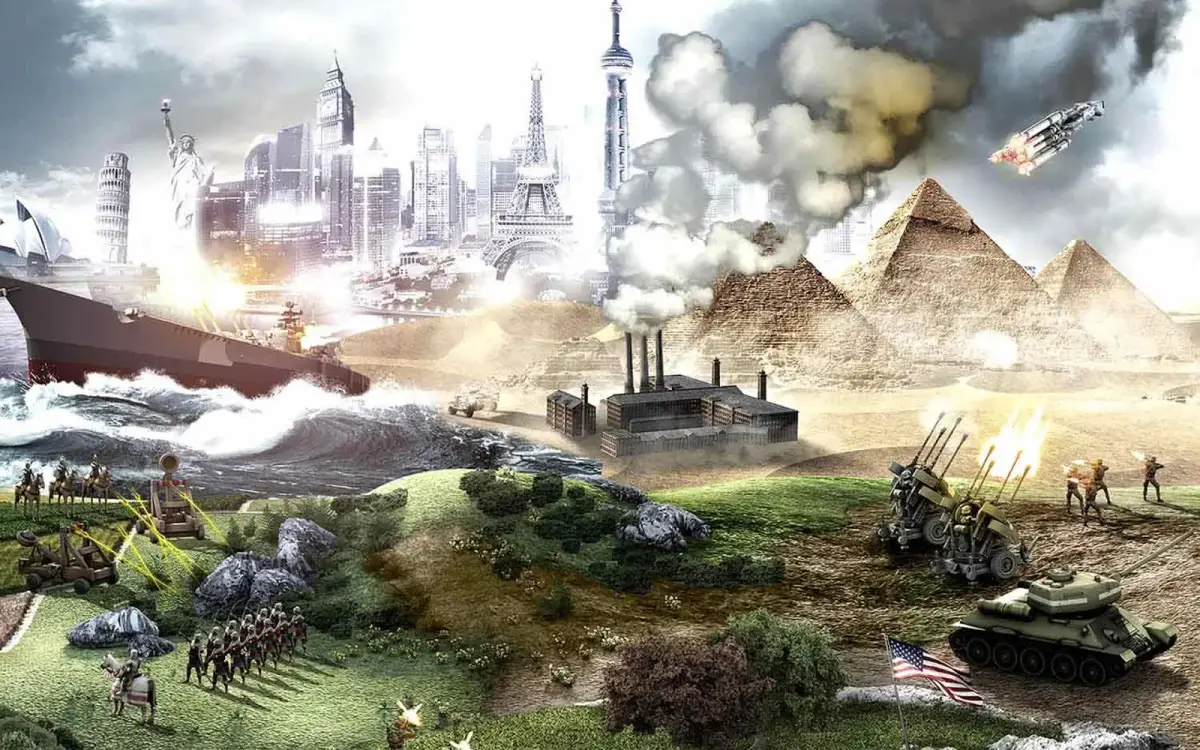
Explore the rise of the Samurai and Shogunate in Civilization V, from the Gempei War to Japan's unification.
The Samurai emerged as a major power in Japan, serving as bodyguards and generals. By the late 11th century, Taira Kiyomori gained significant influence, leading to his son Antoku ascending the throne in 1180. However, the Taira clan was destroyed in 1185 by the Minamoto clan, concluding the five-year Gempei War.
Following this victory, Minamoto Yoritomo established a military government, the shogunate, ruled by a shogun. This system persisted for nearly 700 years until 1868.
Over centuries, power shifted to the Hojo family, who repelled Emperor Go-Toba's attempt to regain power in the early 12th century and later defeated Mongol invasion attempts in the late 12th century, aided by typhoons known as kamikaze.
The Hojo clan fell in 1333 when Emperor Go-Daigo launched a coup. This led to a split into Northern and Southern imperial courts for 60 years, with real power held by the Southern shogunate. The courts reunited in 1391 under shogun Ashikaga Takauji.
The 14th century saw increased farming family power and resistance to warlords, with major uprisings in 1428, 1429, and 1441. Civil war erupted in 1467 over shogunal succession, lasting about 10 years and causing significant destruction. Central authority weakened, leading to local rebellions and the rise of daimyo.
The period from 1338-1573, known as the "Warring States period," was characterized by near-constant warfare between daimyo as the shogunate and imperial family held little power. Castles were built, and siege warfare advanced, especially after the introduction of muskets by European traders.
In 1549, Oda Nobunaga inherited land, money, and retainers. Within eleven years, he controlled Owari province, utilizing muskets effectively. He allied with Tokugawa Ieyasu in 1562.
In the 1560s, Nobunaga captured Kyoto and deposed the Shogun in 1573, consolidating power. By his assassination in 1582, he had unified nearly half of Japan.
Oda was succeeded by Toyotomi Hideyoshi, who unified all of Japan by 1590. He implemented tax reform, disarmed the peasantry, and instituted a feudal system. Hideyoshi died in 1598, and Tokugawa Ieyasu took power, becoming shogun in 1603.
Tokugawa Ieyasu, having used Western weapons for unification, began to view Westerners as threats. Christianity was suppressed, Westerners were expelled, and musket use was restricted to his warriors. Japan entered a period of isolation for centuries, avoiding European colonization.
In the 19th century, limited trade occurred with the Netherlands. By mid-century, European powers sought diplomatic relations without success. The United States, seeking ports, sent Commodore Matthew C. Perry's fleet to Uraga Bay in 1853. This display of foreign military power ended the Tokugawa shogunate, returning power to the Emperor.
The young Meiji Emperor, succeeding in 1867, initiated radical reforms for military and economic advancement.
- Understanding the historical context of the Samurai and Shogunate is crucial for grasping the political landscape of feudal Japan in Civilization V.
- The introduction of firearms like muskets significantly altered warfare during the Warring States period.
- The isolationist policies of the Tokugawa Shogunate had long-term impacts on Japan's development.
100% Human-Written. AI Fact-Checked. Community Verified. Learn how AntMag verifies content