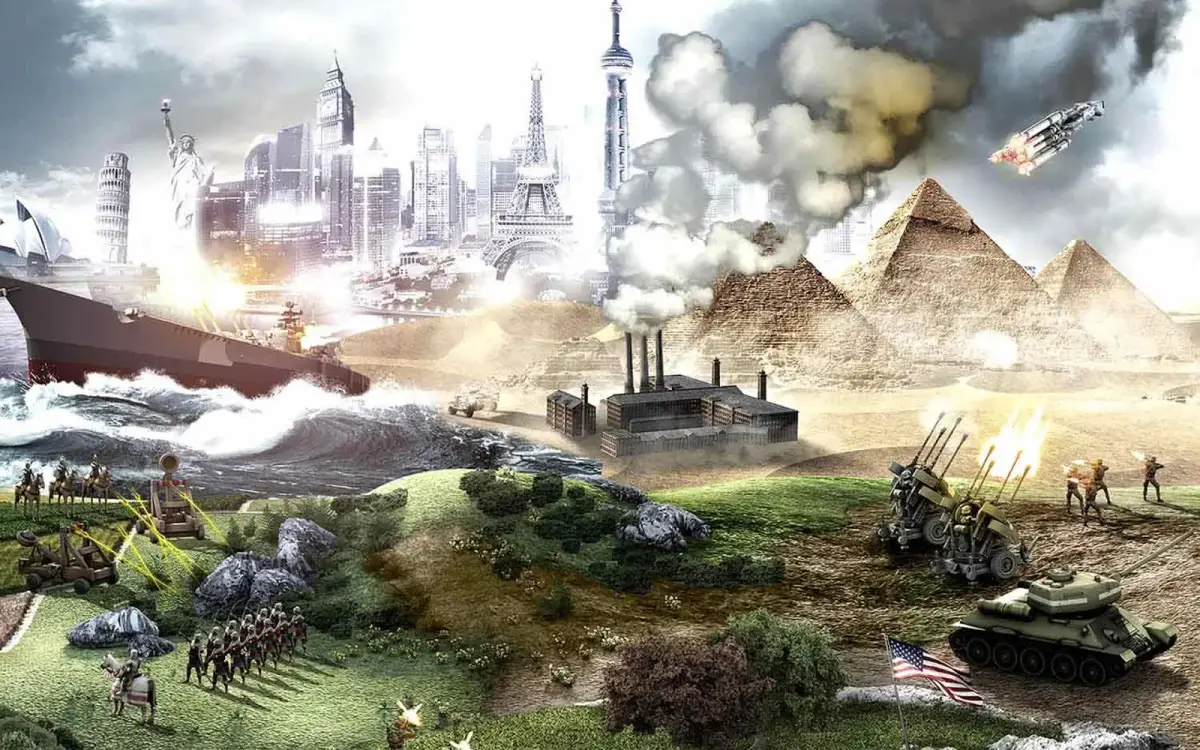
Learn about Augustus Caesar's Roman civilization in Civilization V, including unique units, buildings, and the 'Glory of Rome' power. Detailed historical context included.
Alright, let's dive into Part 55 of our Civilization V guide, focusing on Rome under the leadership of Augustus Caesar. This section breaks down what makes Rome unique and gives you a bit of historical flavor.
Civilization Scales:
- Happiness - 8/10
- Great People - 5/10
- Wonder - 6/10
- Diplomacy - 5/10
- Spaceship - 8/10
While a Spaceship victory is always on the table, Rome really shines when it comes to keeping its population happy. A happy population is key to powering up your Golden Ages, and with Rome's tendency for high growth, you'll find their cities are quite lucrative targets if you're looking to capture them.
Rome - Augustus Caesar
- Leader: Augustus Caesar
- Unique Unit 1: Ballista (replaces Catapult)
- Unique Unit 2: Legion (replaces Swordsman)
- Unique Building: None
Civilization Power: THE GLORY OF ROME
- +25% production bonus for buildings constructed outside the Capital that have already been built in the Capital.
This power is fantastic for expanding your empire. Once you've built a key building in your capital, you'll get a significant production boost when you build it in any other city. This really speeds up your infrastructure development across your empire.
History of Rome
The Roman Empire is truly one of history's most impressive and enduring political entities, spanning from around the 8th century BC to the 14th century AD in some of its forms. The Romans were masters of innovation and weren't afraid to adopt the best ideas from other cultures. They left an indelible mark on Western civilization, influencing law, art, architecture, language, and warfare.
Rome itself, located near the Tibur River in central Italy, benefited from a varied landscape. The coastal areas offered fertile farmland, while the central highlands could get quite cold. At its peak, the Empire stretched across much of Europe, the Middle East, and North Africa, meaning its terrain and climate were incredibly diverse.
Legend tells us Rome was founded by Romulus and Remus, twin sons of Mars, who were raised by a she-wolf. After a dispute over who would rule, Romulus killed Remus and became the first king. While archaeologists point to settlements dating back to the 8th century BC, Rome's strategic location made it a vital trading post, absorbing advancements from both the Etruscan and Greek civilizations. This prime location also meant constant conflict with neighbors like the Etruscans and Sabines.
Roman tradition speaks of a tyrannical last king, Tarquinius Superbus, who was overthrown after his son's infamous act. Modern theories suggest a more complex political shift, possibly involving Etruscan conquest followed by their withdrawal, leading the Romans to establish a Republic. This transition is believed to have occurred around the end of the 5th century BC.
The Roman Republic's political system evolved, but initially, it was led by two consuls who held equal power as chief magistrates and military commanders. They were elected annually by the army. In times of crisis, a dictator could be appointed with supreme military command, but only for a six-month term.
The Senate, composed of around 300 men from leading families, acted as an advisory body but wielded immense political influence. Two assemblies, the
100% Human-Written. AI Fact-Checked. Community Verified. Learn how AntMag verifies content