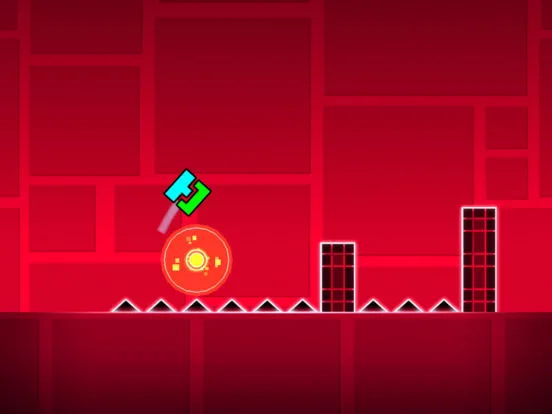
Decode the Geometry Dash level rating system. Understand how levels get rated and the criteria creators must meet for official validation and stars.
Understanding the Geometry Dash level rating system is crucial for both players seeking new challenges and creators aiming for recognition. This detailed guide breaks down the process, criteria, and actionable steps to get your levels rated, ensuring you maximize your chances of official validation.
I. The Rating Process: From Submission to Star
The journey of a level from creation to official rating involves several key stages, each with specific requirements and community interaction.
- Initial Upload & Player Feedback:
- Actionable Step: After completing your level in the editor, upload it to the servers. Ensure your level is set to "Unlisted" initially if you want to gather private feedback, or "Public" to immediately expose it to the community.
- Strategy: Share your level ID with trusted friends or community groups. Encourage them to play and provide constructive criticism on gameplay flow, sync, and potential bugs. This early feedback is invaluable for refining your creation before seeking official attention.
- Demonstrating Playability & Sync:
- Actionable Step: Record a full, unedited playthrough of your level. This "proof of concept" video is essential for moderators to assess the level's playability and sync.
- Strategy: Focus on a clean, consistent run. Highlight challenging sections and demonstrate how the gameplay elements align with the music. A well-synced level, where obstacles and triggers react perfectly to the beat, is a primary factor in gaining moderator interest.
- Moderator Review & Nomination:
- Item Name: "Moderator Nomination"
- Location: This occurs internally within the Geometry Dash moderation team.
- Strategy: To attract moderator attention, your level needs to stand out. This often involves achieving a significant number of plays, likes, and positive comments from the community. Some creators directly message trusted moderators with their level ID and proof of playability, though this isn't a guaranteed method.
- Key Criteria for Nomination:
- Originality: Does the level offer unique gameplay mechanics or visual themes?
- Quality of Decoration: Is the level visually appealing, consistent, and free of "copy-paste" sections?
- Sync: Is the gameplay perfectly synchronized with the music?
- Flow & Enjoyment: Is the level fun to play, with a natural progression of difficulty?
- Bug-Free: Are there any unfair traps, impossible jumps, or visual glitches?
- Official Rating & Star Assignment:
- Item Name: "Stars" (1-10, depending on difficulty)
- Location: Awarded directly to your level upon official rating.
- Strategy: Once nominated, the level enters a queue for review by RobTop himself or a select group of trusted Elder Moderators. The final decision on rating and star count rests with them. Continue to engage with your community and address any remaining feedback.
II. Factors Influencing Star Count & Difficulty
The number of stars a level receives is directly tied to its perceived difficulty and overall quality. Here’s a breakdown of what influences this crucial metric:
Table: Difficulty Tiers and Star Ranges
| Difficulty Tier | Star Range | Key Characteristics |
|---|---|---|
| Easy | 1-2 Stars | Simple timings, few complex sequences, forgiving hitboxes. Ideal for beginners. |
| Normal | 3 Stars | Introduces basic memorization, slightly tighter timings, common obstacle patterns. |
| Hard | 4-5 Stars | Requires more precise timing, some quick reactions, moderate memorization. |
| Harder | 6-7 Stars | Significant memorization, challenging timings, multi-object interactions, often includes mini-gameplay. |
| Insane | 8-9 Stars | Very tight timings, complex sequences, demanding memorization, often requires specific strategies for sections. |
| Demon | 10 Stars | Extreme difficulty, pixel-perfect timings, extensive memorization, often features wave or ship sections with minimal space. Further subdivided into Easy Demon, Medium Demon, Hard Demon, Insane Demon, and Extreme Demon by the community. |
III. Maximizing Your Level's Rating Potential
Beyond the core criteria, several advanced strategies can significantly increase your level's chances of being rated and receiving a higher star count.
- Decoration & Visual Appeal:
- Actionable Step: Invest time in learning advanced decoration techniques. Experiment with custom backgrounds, detailed foregrounds, glow effects, and color schemes.
- Strategy: Aim for a cohesive visual theme. Avoid clashing colors or overly busy sections that distract from gameplay. Utilize triggers like
Alpha,Move, andRotateto create dynamic and engaging visual effects that enhance the music. Consider using custom objects and blending modes for unique aesthetics.
- Gameplay Innovation & Flow:
- Actionable Step: Introduce novel gameplay mechanics or unique twists on existing ones. Ensure smooth transitions between game modes (cube, ship, ball, UFO, wave, robot, spider).
- Strategy: A level with excellent "flow" feels natural to play, even if difficult. Avoid sudden, unexplained changes in speed or gravity without clear visual cues. Test your level extensively to identify and eliminate "chokepoints" or unfair sections that break the flow.
- Music Sync & Atmosphere:
- Actionable Step: Build your level directly around the chosen song. Every jump, portal, and obstacle should ideally align with a beat, melody, or sound effect in the music.
- Strategy: Use the editor's music markers to precisely time your gameplay elements. Consider how the music's intensity changes and reflect that in the level's difficulty or visual complexity. A strong connection between audio and visuals creates an immersive experience.
- Community Engagement & Promotion:
- Actionable Step: Share your level ID on various Geometry Dash platforms, including YouTube, Discord servers, and Reddit. Engage with feedback and make necessary adjustments.
- Strategy: Don't just upload and forget. Actively promote your level. Respond to comments, thank players for their feedback, and consider creating a showcase video that highlights the level's best features. A strong community buzz can significantly boost your level's visibility to moderators.
- Bug Testing & Polish:
- Actionable Step: Thoroughly test your level for bugs, unfair traps, or impossible sections. Have multiple players test it on different devices if possible.
- Strategy: Pay attention to details. Ensure all portals are correctly placed, triggers activate as intended, and there are no "blind jumps" without adequate warning. A polished, bug-free level demonstrates professionalism and respect for the player.
100% Human-Written. AI Fact-Checked. Community Verified. Learn how AntMag verifies content